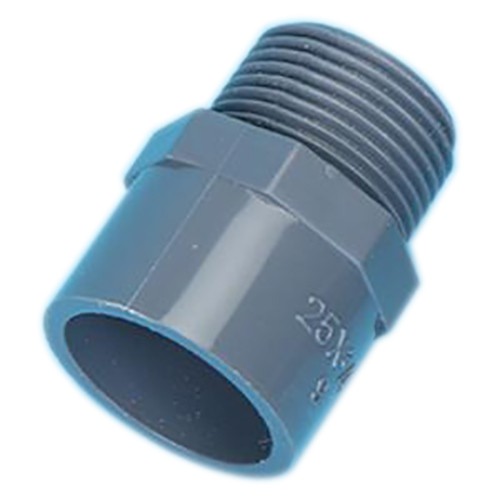
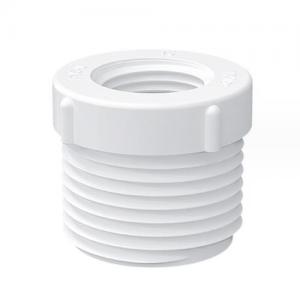
Plastic Fitting Connector Male Union / Plastic Flexible Pipe Adaptor
Processing Capabilities for Plastic Threaded Adapter / Fitting
| Item | Detailed Capabilities |
|---|---|
| Material | PVC, CPVC, PP, Nylon (PA6/PA66), PVDF, ABS, PE, or custom engineering plastics |
| UV Stability | UV-stabilized options available for outdoor applications (PVC, CPVC, PP) |
| Shape / Style | Hexagonal body, round body, reducing adapter, straight adapter, elbow, tee, or custom designs |
| Connection Type (End 1) | Male Threaded (BSP, NPT, Metric), Female Threaded, Socket (solvent weld), Flange, Hose Barb |
| Connection Type (End 2) | Socket (solvent weld), Female Threaded, Male Threaded, Flange, Hose Barb |
| Port Size | 1/4" to 4" (DN8–DN100), custom sizes available |
| Thread Standard | BSP (G), NPT, Metric (M), or custom thread profiles |
| Pressure Rating | 0.6–1.6 MPa (6–16 bar), depending on material and design |
| Operating Temperature | -20°C to 95°C (depending on material: PVC 0–60°C, CPVC 0–95°C, PP 0–90°C, Nylon -40–120°C) |
| Sealing Method | Thread sealant (PTFE tape), O-ring, gasket, or solvent welding |
| Surface Finish | Smooth, textured, or custom finishes available |
| Color | Grey, white, black, blue, or custom colors matched to customer requirements |
| Marking | Size, material, pressure rating, or custom markings molded or printed on body |
| Processing Tolerance | Thread tolerance ±0.1mm, Diameter tolerance ±0.1mm, Length tolerance ±0.5mm |
| Certifications | ISO9001, ROHS, CE, NSF, food-grade options available |
| Applications | Water treatment, irrigation, plumbing, chemical processing, HVAC, marine, aquarium, and industrial fluid handling |
Injection Molding Process for Plastic Threaded Adapter
1. Raw Material Preparation
Select high-quality PVC, CPVC, PP, Nylon (PA6/PA66), or PVDF pellets based on application requirements (pressure, temperature, chemical compatibility). The raw material is dried (for Nylon and PP) and pre-conditioned to remove moisture, ensuring optimal molding performance and preventing surface defects like silver streaks or bubbles.
2. Injection Molding
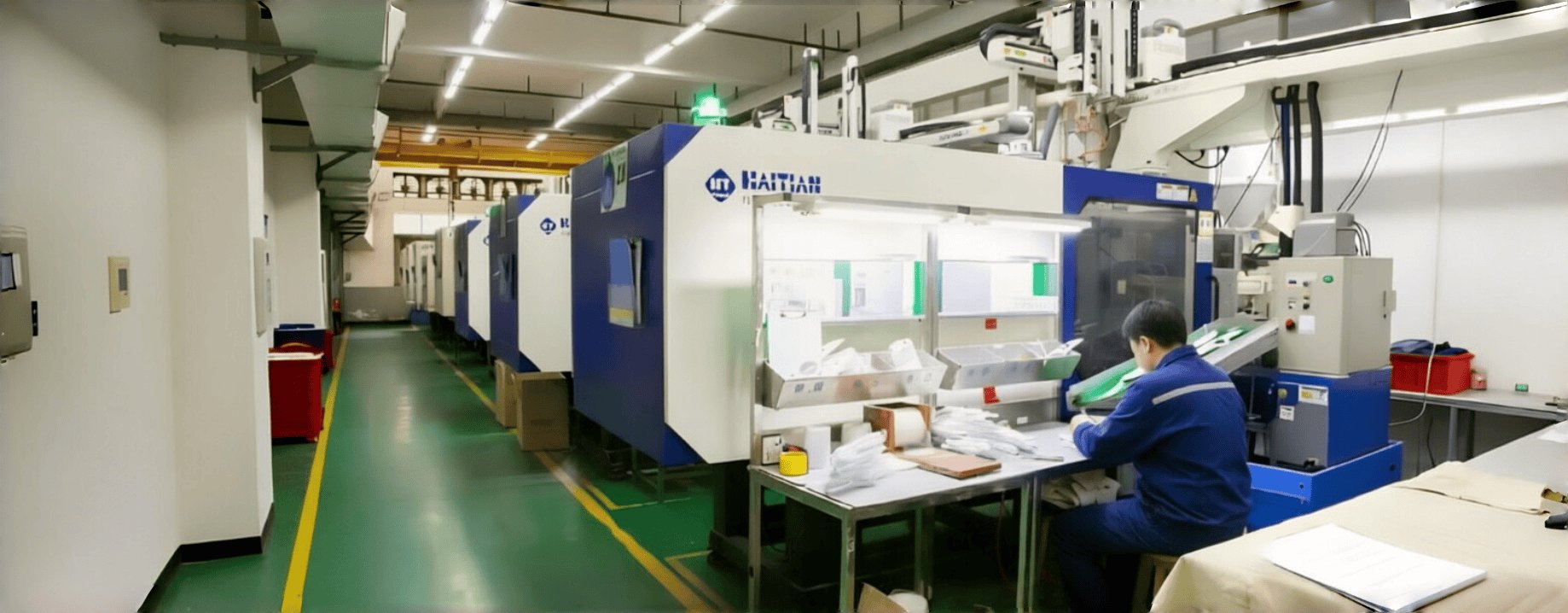
The plastic threaded adapter is produced through precision injection molding. The mold uses a balanced runner system to ensure uniform filling of the hexagonal body, threaded end, and socket end. Process parameters (melt temperature, injection pressure, cooling time) are strictly controlled to achieve dimensional accuracy, thread quality, and structural integrity.
3. Thread Forming
The male threaded end is formed directly in the mold using precision-machined thread inserts. The thread profile (BSP, NPT, or Metric) is replicated with high accuracy to ensure proper fit and sealing with mating components.
4. Cooling & Ejection
The molded part is cooled uniformly using an optimized cooling system to prevent warpage and shrinkage. Ejection uses a stripper sleeve or ejector pins with proper draft angles to prevent drag marks or stress whitening on the surface.
5. Post-Processing & Inspection
The part is deflashed, inspected for dimensional accuracy (thread pitch, diameter, length), and tested for pressure resistance and sealing performance. Markings (size, material, pressure rating) are applied as required.
6. Packaging & Delivery
Finished adapters are individually packed to prevent damage during transport. Packaging options include poly bags, blister packs, or custom cartons. We ship products by sea or air, depending on customer requirements.
Manufacturing Difficulties & Countermeasures
1. Thread Quality & Dimensional Accuracy
| Item | Description |
|---|---|
| Challenge | Threaded ports may have incomplete threads, flash, or dimensional deviation, causing leakage or difficulty in installation. |
| Root Cause | Mold wear; insufficient injection pressure; improper mold temperature; poor venting at thread areas. |
| Countermeasure | Use hardened steel inserts for thread molds; optimize venting; maintain consistent mold temperature; implement in-process thread gauging (GO/NO-GO gauges). |
2. Hexagonal Body Warpage
| Item | Description |
|---|---|
| Challenge | The hexagonal body tends to warp or deform during cooling due to uneven wall thickness and sharp corners. |
| Root Cause | Uneven cooling rates; inconsistent wall thickness; insufficient packing pressure; high injection speed. |
| Countermeasure | Optimize mold design with balanced cooling channels; use CAE simulation to predict shrinkage; increase packing pressure and time; adjust gate location for uniform flow; design generous fillets at corners. |
3. Weld Lines & Flow Marks
| Item | Description |
|---|---|
| Challenge | Weld lines and flow marks may appear on the surface, reducing appearance quality and potentially causing structural weakness. |
| Root Cause | Flow fronts meeting at low temperature; insufficient mold temperature; low injection speed; poor gate location. |
| Countermeasure | Increase mold temperature; optimize injection speed profile; adjust gate location to avoid weld lines in critical areas; use sequential valve gating if multi-cavity. |
4. Ejection Marks & Stress Whitening
| Item | Description |
|---|---|
| Challenge | Drag marks, ejection marks, or stress whitening may appear on the surface during ejection, especially on the smooth socket end. |
| Root Cause | Insufficient draft angle; rough mold surface; excessive ejection force; insufficient cooling before ejection. |
| Countermeasure | Maintain draft angles of 1.5–3°; polish cavity surfaces to SPI A1–A2; use stripper sleeves or air-assisted ejection; optimize ejection speed and force; ensure adequate cooling time. |
5. Material Degradation (PVC/CPVC)
| Item | Description |
|---|---|
| Challenge | PVC and CPVC are temperature-sensitive and prone to degradation, causing discoloration and reduced mechanical properties. |
| Root Cause | Excessive melt temperature; long residence time in barrel; insufficient purging. |
| Countermeasure | Maintain melt temperature within recommended range (PVC: 170–190°C; CPVC: 190–210°C); use zone-by-zone barrel temperature control; purge regularly; avoid excessive residence time. |
6. Solvent Weld Socket Deformation
| Item | Description |
|---|---|
| Challenge | The smooth socket end may deform or become out-of-round, affecting solvent weld joint quality. |
| Root Cause | Uneven cooling; insufficient packing; ejection force too high; mold wear. |
| Countermeasure | Optimize cooling around socket; use roundness gauges for in-process inspection; maintain consistent packing pressure; replace worn mold inserts. |
Application Industries
Water Treatment
Pipe connections, RO system fittings, sediment filter adapters
Chemical Processing
Acid/alkali transfer lines, chemical dosing systems, reagent connections
Food & Beverage
Beverage dispensing lines, dairy processing connections, sanitary piping
Pharmaceutical
Purified water lines, sterile fluid transfer, laboratory piping
Automotive
Coolant lines, fuel system connections, urea/AdBlue (SCR) lines
Electronics
Coolant filtration in CNC machining, semiconductor rinse water lines
Agriculture
Irrigation system fittings, fertigation connections, greenhouse piping
HVAC
Chiller water connections, cooling tower piping, condensate lines
Mining & Metallurgy
Slurry transfer lines, process water piping, reagent dosing connections
Textile
Dye liquor lines, wastewater treatment piping, chemical feed connections
Plumbing & Construction
Potable water piping, drainage connections, industrial plumbing systems
Marine & Aquarium
Seawater piping, aquarium filtration connections, boat plumbing systems
Our Workflow
A transparent, step-by-step process from design to delivery — tailored for plastic threaded adapters.
Stage 1 — Inquiry & Drawing Review
You send us your drawing or sample. We review dimensions, material requirements, thread specifications, and pressure ratings within 24 hours.
Stage 2 — DFM Report
Our engineers provide a Design-for-Manufacturability report, highlighting potential issues such as thread quality, warpage, sink marks, and ejection marks, and suggesting optimizations for moldability and cost.
Stage 3 — Mold Design & Fabrication
We design the mold in SolidWorks, simulate filling and cooling with Moldflow, and machine the mold in-house with precision thread inserts and optimized cooling channels (lead time: 25–35 days).
Stage 4 — Sampling & Approval
We produce T1 samples, send them with inspection reports (dimensional, thread gauge, pressure test, leak test), and iterate until you approve.
Stage 5 — Mass Production & Shipping
Once approved, we begin mass production with full SPC monitoring and 100% pressure testing. Typical lead time: 15–20 days after approval.
Why Choose Yixing Technology?
Partner with a trusted leader in precision plastic threaded fitting manufacturing.
20+ Years Experience
Specialized in injection molding and precision thread forming since 2003. We have completed 5,000+ custom fitting and adapter projects.
Extensive experience in molding PVC, CPVC, PP, Nylon, and PVDF threaded adapters with BSP, NPT, and Metric threads.
ISO 9001:2015 Certified
Full quality management system with traceable production records for every batch.
We inspect each plastic threaded adapter batch for dimensional accuracy, thread quality, pressure resistance, and sealing performance.
One-Stop Service
From material sourcing → mold design → injection molding → thread forming → inspection → packaging, all under one roof in our Shanghai factory.
From precision thread inserts and housing molding to pressure testing and global shipping — all under one roof.
Start Your Quote Here
CATEGORIES
LATEST NEWS
CONTACT US
- Mobile: +8615000908770
- Tel: +86-21-51662821
- WhatsApp: 8615000908770
- Email: contact@yxplasticmolding.com
- Address: Room 323, Building B, Hongchun Business Park, No. 980 Qinghewan Road, Qingpu District, Shanghai