Advantages of Our Company in Terminal Stamping Mold Manufacturing
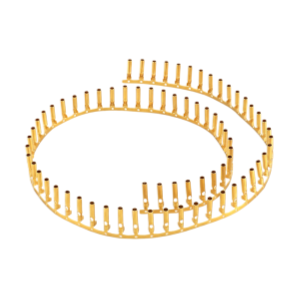
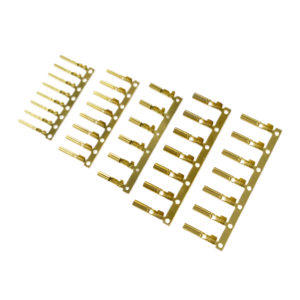
Terminals are essential core components in electronic connectors. Stamping terminal dies and progressive terminal dies are precision tooling systems used to manufacture them from metal strip. Progressive dies perform multiple operations—piercing, blanking, bending, forming, and cutting—in a single continuous pass, enabling high-volume production with consistent quality and minimal material waste.
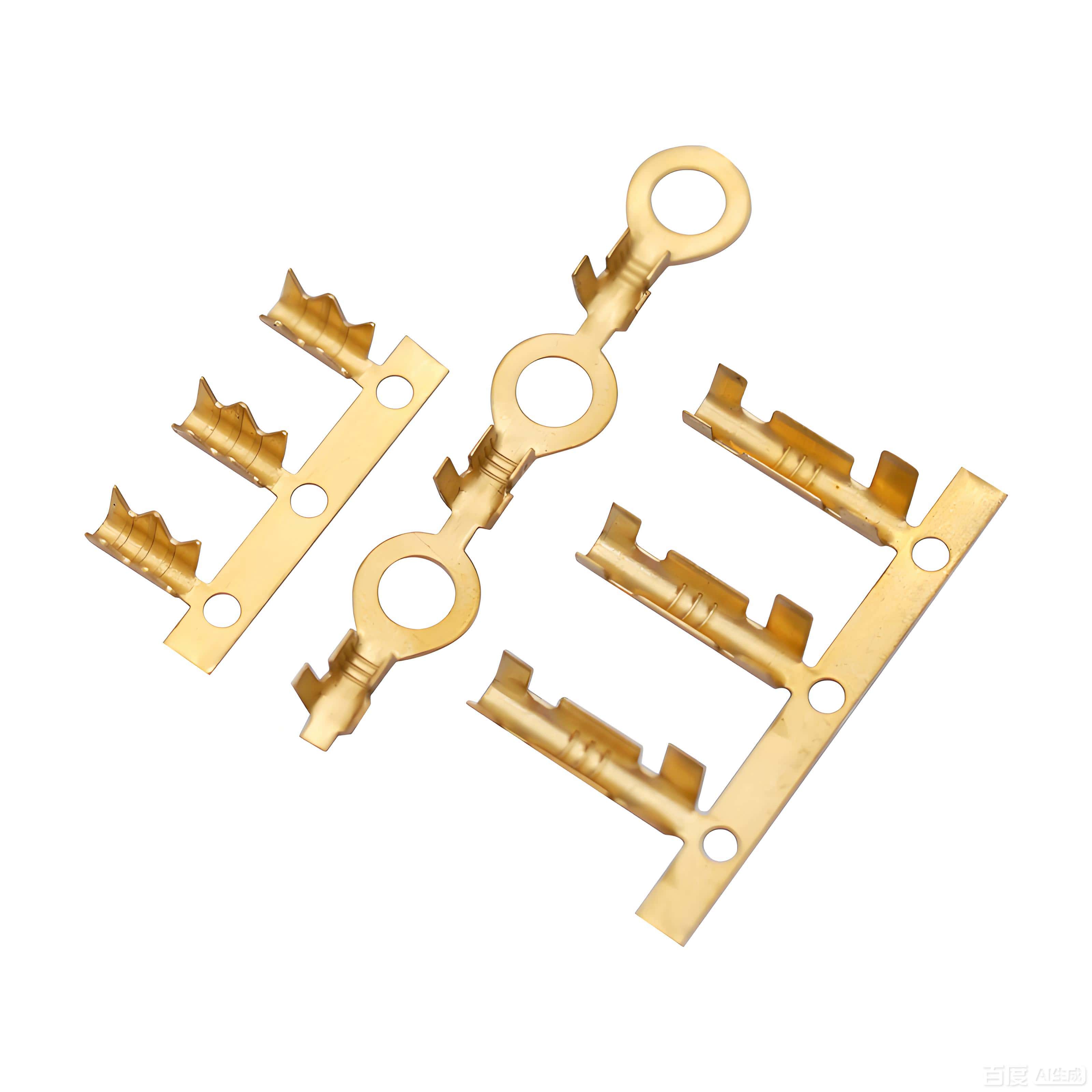
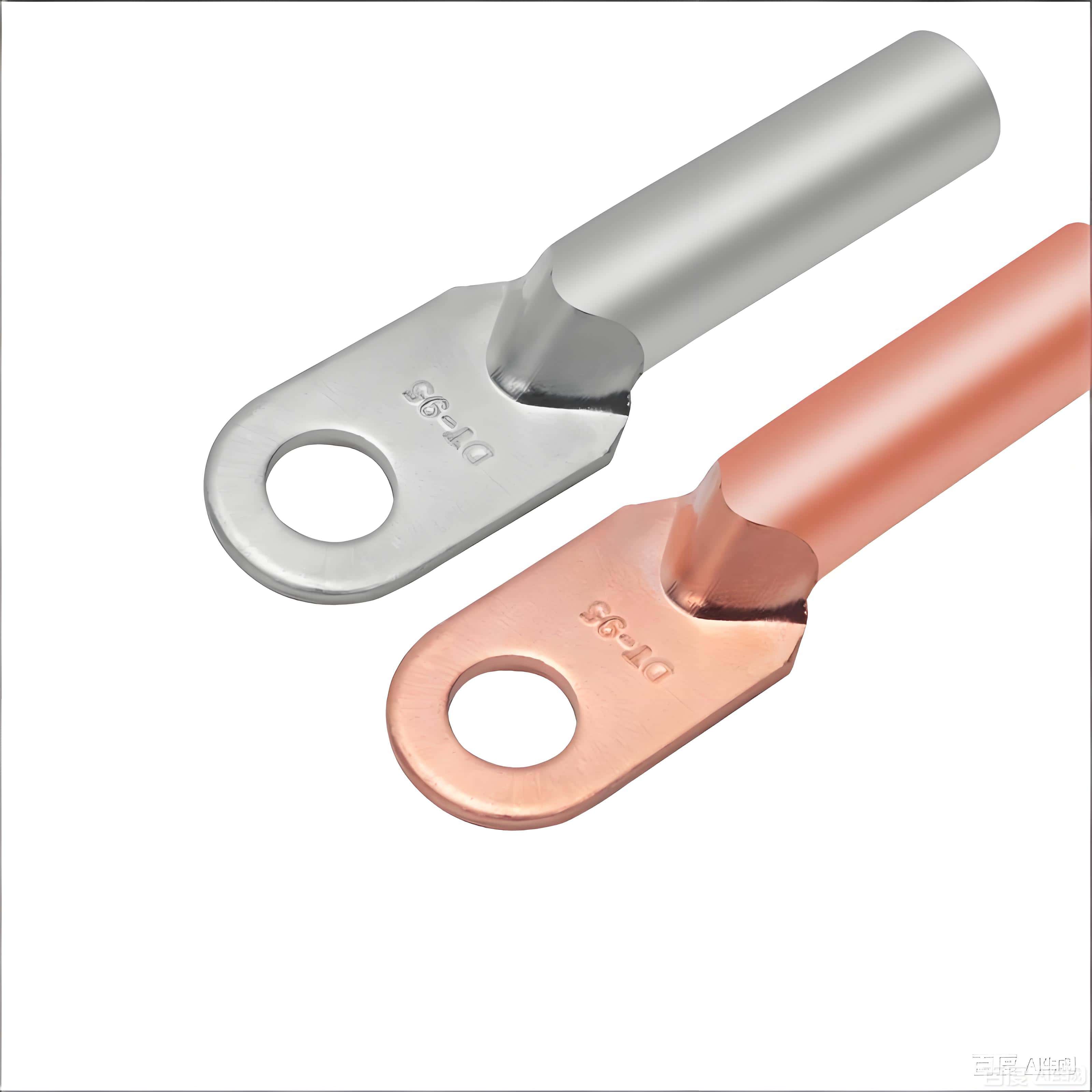
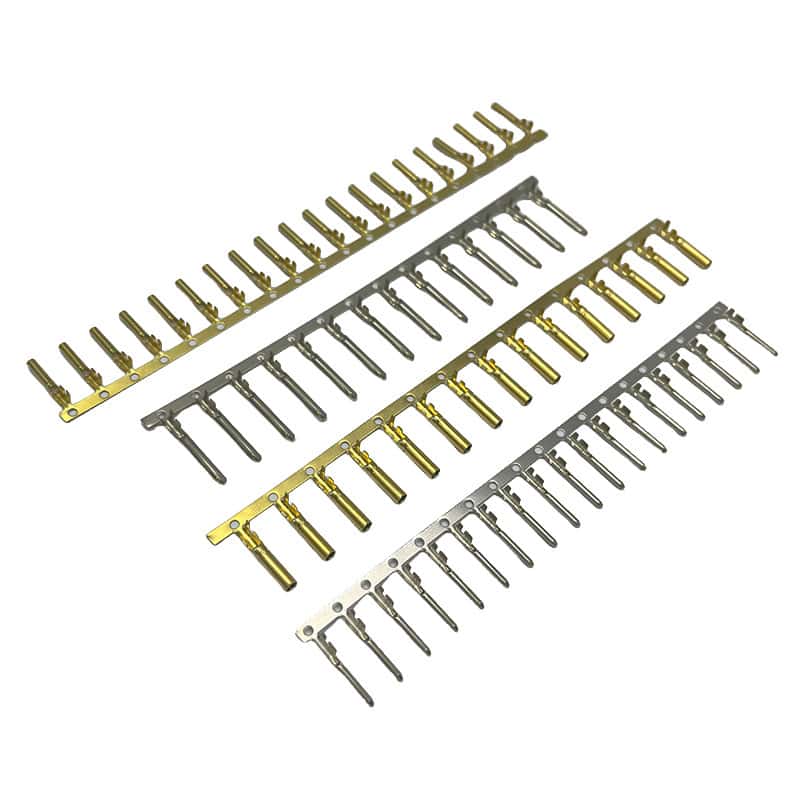
Our company excels in meeting these requirements.
Our Stamping Terminal Manufacturing Capability
|
Capability Item |
Specification |
|
Precision Tolerance |
±2 µm (machined features) |
|
Bending Angle Tolerance |
±0.5° (typical), tighter on request |
|
Pin Pitch Tolerance |
< 0.1 mm |
|
Stamping Speed |
1,000+ SPM (strokes per minute) |
|
Die Life |
10 million strokes (10,000K) |
|
Press Tonnage |
Up to 200 tons |
|
Number of Stations |
Up to 10+ stations (progressive die) |
|
Strip Thickness Range |
0.1 mm – 4.0 mm |
|
Die Steel (Punches / Inserts) |
SKD11, DC53, SKH-51, Tungsten carbide: YC20C, YG20 |
|
Die Clearance |
3–8% of strip thickness (material dependent) |
|
Burr Height |
≤ 0.05 mm (typical), ≤ 0.02 mm on request |
|
Flatness |
≤ 0.05 mm / 100 mm |
|
Surface Finish (Die) |
Ra 0.2–0.4 µm (critical surfaces) |
|
Plating Options |
Tin, silver, gold, nickel |
|
Quality Control |
CMM, vision inspection, SPC, CPK ≥ 1.33 |
Applicable Materials
1. Common U.S. Grades (UNS / AISI)
| Material Category | Common Name | Typical U.S. Grades (UNS / AISI) | Common Standards |
|---|---|---|---|
| Pure Copper | Copper strip / ETP copper | C11000 (ETP), C10200 (OF), C10100 (OFE) | ASTM B152 / B170 |
| Phosphor Bronze | Phos bronze | C51000 (5% Sn), C52100 (8% Sn), C52400 | ASTM B103 |
| Brass | Brass | C26000 (cartridge brass 70/30), C26800, C22000 (commercial bronze 90/10) | ASTM B36 |
| Stainless Steel | Stainless steel | 301, 304, 304L, 316, 316L, 430 | ASTM A666 / A240 |
2. Material Selection Guide (Terminal / Connector Applications)
| Requirement | Recommended Material |
|---|---|
| High conductivity, low resistance (power terminals) | C11000 copper |
| High spring force, fatigue resistance (contact springs) | C51000 / C52100 phos bronze |
| Low cost, general conductivity (standard terminals) | C26000 brass |
| High strength, corrosion resistance, high temperature | 301 / 304 stainless steel |
| Magnetic or low-cost corrosion resistance | 430 stainless steel |
| High mating cycles, miniaturized terminals | C52100 phos bronze, 301 SS |
High Quality Progressive Dies for High Quality Terminals
We employ high precision-guided systems—including ball-bearing guide posts and bushings, as well as dual guiding mechanisms. High precision ensures the upper and lower dies alignment during high-speed stamping.
Manufactured with the highest tolerances, our plate assemblies prevent movement or deformation during die clamping, ensuring consistent stamping in production.
These are the "actuators" that carry out all the operations; the material grade always determines the mold life. All punches and dies are fabricated from ultra-hard, wear-resistant materials—such as high-speed steel SKH-51, SKD11, DC53, and tungsten carbide alloys (YC20C, YG20)—ensuring longevity and consistent performance.
Our automatic feeding system feeds the material into the die step-by-step. Additionally, guide pins engage with pre-punched positioning holes before each station, correcting any feeding misalignment.
Misalignment or feeding errors are instantly monitored; the system will automatically shut down to prevent mold damage and reduce downtime.
Our Process Flow
DFM Design → Die Manufacturing (CNC / Wire EDM / EDM) → Die Assembly → Trial Run (T1) → Small-Batch Validation → Mass Production
- DFM – Review drawings, strip layout, stations, clearance, springback.
- Die Manufacturing – CNC, wire EDM, sinker EDM, grinding, heat treatment, coating, inspection.
- Die Assembly – Assemble plates, punches, pilots, springs; set clearance and feed.
- Trial Run (T1) – Mount die, run samples, check dimensions, burr, angle; adjust.
- Small Batch – 500–5,000 pcs; CPK/PPK, tool wear, plating, PPAP approval.
- Mass Production – High-speed stamping, SPC, maintenance, plating, packaging.
Why Choose Yixing Technology?
Our company excels in meeting these requirements by our advanced process capabilities and expertise:
To ensure reliable matching with other components, critical features such as bend angles and pin pitches must be held within tolerances of less than 0.1 mm. This requires molds with superior precision. Our machining equipment's tolerances reach ±2 µm, significantly exceeding the standards of stamping dies.
To ensure optimal conductivity and flawless plating, terminal surfaces must be free of burrs and scratches. Minor burs can lead to short circuits. Our molds feature sharp cutting edges and precisely controlled clearances, enabling clean, burr-free stamping.
Modern terminals often require multiple forming operations—such as blanking, bending, cutting, and deep drawing—integrated into a single progressive die. Our mold designers specialize in creating complex, multi-processes into one progressive die.
Because of the high-volume demand for terminals, the mold often needs 1,000+ strokes per minute. To support continuous and high-speed operation, our molds are made from high-rigidity, high-toughness materials, such as SKD11, DC53, and tungsten carbide alloys, ensuring durability and long service life.
FAQ
Send Your Message
Feel free to contact us. We are ready to assist you.
Start Your Quote Here
CATEGORIES
LATEST NEWS
CONTACT US
- Mobile: +8615000908770
- Tel: +86-21-51662821
- WhatsApp: 8615000908770
- Email: contact@yx-molding.com
- Address: Room 323, Building B, Hongchun Business Park, No. 980 Qinghewan Road, Qingpu District, Shanghai