One-stop Solutions for Motor Housing Stamping
Motor housings are typically deep, cylinder-shaped parts. With 20+ years of experience, Yixing Technology has manufactured many of these components.
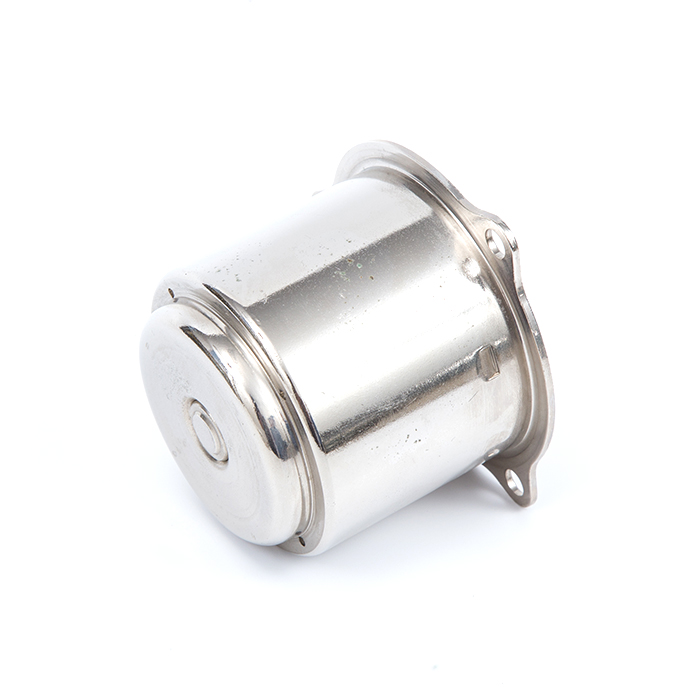
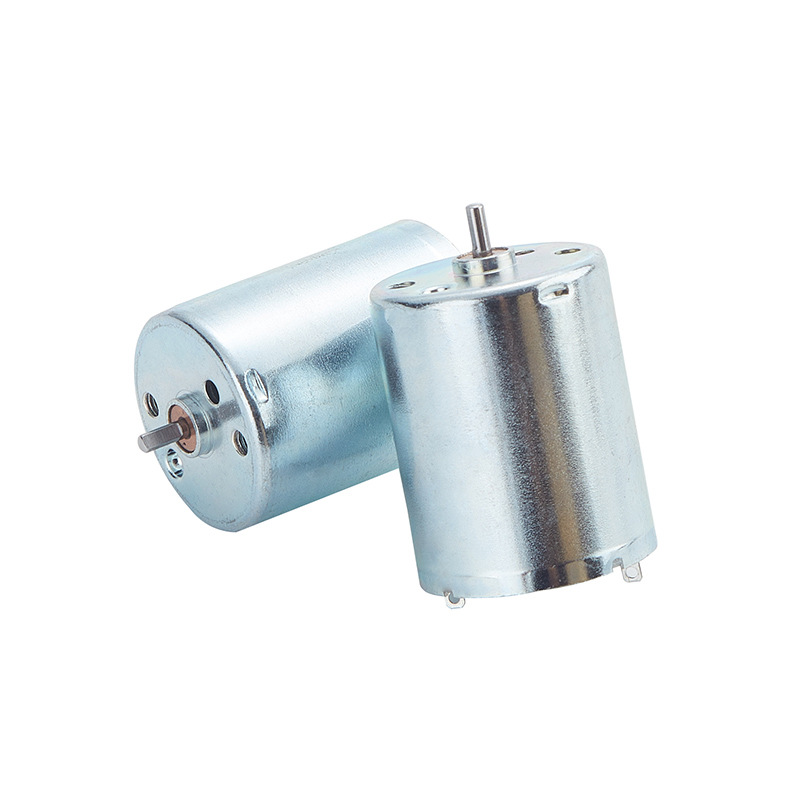
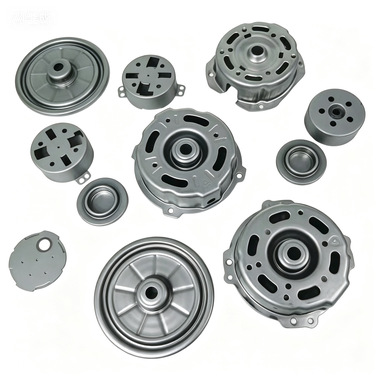
Motor Housing Stamping — Manufacturing Capability
| Capability Item | Specification |
|---|---|
| Dimensional Tolerance | ±0.05 mm |
| Coaxiality Tolerance | ±0.05 mm |
| Roundness / Circularity Tolerance | ±0.02 mm |
| Applicable Materials | Aluminum, Steel, Alloy |
| Strip / Sheet Thickness Range | 0.2 – 4.0 mm |
| Process Types | Progressive die / Transfer die / Metal spinning (dieless) |
| Die Steel (Punches / Inserts) | SKD11, DC53, Tungsten carbide |
| Die Life | 10 million strokes |
| Stamping Speed | 200–800 SPM (progressive); 15–60 SPM (transfer) |
| Press Tonnage | 100–600 T (progressive / transfer) |
| Number of Stations | Up to 10+ stations |
| Burr Height | ≤ 0.05 mm |
| Flatness | ≤ 0.05 mm / 100 mm |
| Surface Finish | Ra 0.4–1.6 µm (as stamped) |
| Plating / Coating Options | Zinc, nickel, tin, powder coating, e-coating |
| Quality Control | CMM, vision inspection, SPC, CPK ≥ 1.33 |
Mold Design
Motor housings are normally manufactured by the deep drawing process. Our engineers design many motor housing molds; the main key factors are as follows:
Calculate the thickness and draw ratios:
The first draw ratio (m₁) is usually 0.48–0.55. After that, each draw ratio gets bigger (m₂ ≈ 0.73–0.80, m₃ ≈ 0.78–0.85) because the material gets harder and can't stretch as much each time. The limiting draw ratio (LDR) shouldn't go over 2.0–2.2 — meaning your blank diameter shouldn't be more than about 2x your punch diameter. If you're ironing the wall, keep single-pass thinning at 10–35%. Go higher, and you'll thin the wall too much or tear it.
Lubrication:
We normally want little to no lube on the punch face (friction there actually helps stretch the material), but want plenty of lube on the die surface and die entry radius (so material can flow in smoothly). It's counterintuitive, so we can only use good-quality stamping oil and graphite grease such as MoS₂—it cuts punch load and lets you run faster.
Stopping wrinkles and cracks:
Wrinkles come from too little blank holder force. Cracks come from too much. You've got to find the sweet spot. Typical blank holder force is 20–40% of the punch force. The balance shim between upper and lower blank holders should be 110% of sheet thickness — that lets the flange thicken without getting pinched. And don't make the die radius too small — it restricts flow and causes cracks. Rule of thumb: at least 8–10 times sheet thickness.
Main process
Based on different quantities and complexity, there are 3 kinds of processes we use.
1. Progressive Die: The Best Choice for High-Volume Production
For large production runs, our progressive dies can meet the high-quality standard.
1) High Concentricity and Roundness
Motor housings must hold very tight tolerances—often within 0.05 mm—to properly fit internal components like stators and bearings. Our precision molds are designed to prevent any deformation, ensuring every part is perfectly round and dimensionally accurate for smooth, quiet motor operation.
2) Fully Automated, High-Speed Production
From a simple coil of steel to a finished part, everything happens in one progressive die. The metal moves through a single die where it is punched, drawn, shaped, and sized. Using the progressive die, we significantly reduce labor costs and production time.
3) Integrated Deep Drawing & Side Forming
Our molds are designed to deep-draw the housing body while simultaneously punching side features like terminal boxes and mounting holes. This eliminates the need for extra steps and secondary operations.
4) High-Precision Feed System
A high-precision feed system keeps the metal strip perfectly aligned throughout the stamping process. This guarantees that every hole and feature is exactly where it should be, which is critical for the housing.
5) Avoid Wrinkles and Cracks
Deep drawing can easily cause the metal to wrinkle on the walls or crack at the corners. Our engineers carefully design the process to control material flow and distribute stress evenly, preventing these common defects.
6) Long-Life Molds
Built for speed and high volume, our molds are made from premium mold materials like SKD11, DC53, and tungsten carbide. This always means our molds can produce millions of parts, reducing your downtime and long-term tooling costs.
2. Transfer Stamping Die: Ideal for Complex or Lower-Volume Parts
For larger housings or those with complex shapes like flanges, we use a flexible transfer mold.
1) Robotic Arm Transfer
To save labor costs, parts are moved between independent molds by robotic arms. These are suitable for more complex designs.
2) Expert Handling of Complex Forming
Our engineers have deep experience in combining multiple processes—like deep drawing, side punching, and flange forming—in a single workflow. This expertise allows us to create even the most intricate shapes with confidence.
3) Better Use of Material
Because we do not use a continuous strip, we can design the shape of the metal blank for each stage. This flexibility leads to significantly less waste and lower material costs.
4) Easier Maintenance
Since each mold is independent, we can quickly repair or replace a single unit without affecting the others.
3. Mold-Free Manufacturing
We understand that high tooling costs and long lead times can be a problem for new projects or small batches. We don't just build molds; we also provide Mold-Free (Rapid) Manufacturing solutions for motor housings.
1) No Tooling Investment
Ideal for R&D verification, prototyping, or small batches. You can get high-quality motor housings without the heavy cost of tooling.
2) Metal Spinning Technology
We utilize high-speed metal spinning to achieve the deep-cavity, cylindrical shapes required for motor housings. This process offers excellent concentricity and material strength without dies.
3) Fast Production Time
From CAD data to final parts in several days, not weeks. This allows you to test your motor designs in the market immediately.
Our Process Flow
- DFM Design → Review drawings, housing geometry, strip layout, stations, springback.
- Material Selection → Aluminum, steel, or alloy; thickness 0.2–4.0 mm.
- Die Manufacturing → CNC, wire EDM, sinker EDM, grinding, heat treatment, coating, inspection.
- Die Assembly → Plates, punches, pilots, springs; set clearance and feed.
- Trial Run (T1) → Mount die, run samples, check dimensions, coaxiality, roundness, burr; adjust.
- Small Batch → 500–5,000 pcs; CPK/PPK, tool wear, PPAP approval.
- Mass Production → High-speed stamping, SPC, maintenance, plating, packaging.
Why Choose Yixing Technology?
Our company excels in meeting these requirements through our advanced process capabilities and expertise:
1. ULTRA-PRECISION
To ensure reliable matching with other components, critical features such as coaxiality, roundness, and dimensional accuracy must be held within tolerances of ±0.05 mm. This requires molds with superior precision. Our machining equipment's tolerances reach ±2 µm, significantly exceeding the standards of stamping dies.
2. WRINKLE-FREE & CRACK-FREE FORMING
Motor housings often involve deep drawing, where wrinkles and cracks are the biggest risks. Our mold designers carefully balance blank holder force and die radius, and optimize draw ratios and lubrication, ensuring smooth material flow and defect-free forming.
3. MULTI-PROCESS INTEGRATION
Motor housings typically require multiple forming operations—such as blanking, deep drawing, bending, trimming, and flanging—integrated into a single progressive or transfer die. Our mold designers specialize in combining complex, multi-process operations into one die.
4. HIGH-SPEED DURABILITY
Because of the high-volume demand for motor housings, the mold often needs 200–800 strokes per minute. To support continuous and high-speed operation, our molds are made from high-rigidity, high-toughness materials, such as SKD11, DC53, and tungsten carbide alloys, ensuring durability and long service life.
FAQ
Send Your Message
Feel free to contact us. We are ready to assist you.
Start Your Quote Here
CATEGORIES
LATEST NEWS
CONTACT US
- Mobile: +8615000908770
- Tel: +86-21-51662821
- WhatsApp: 8615000908770
- Email: contact@yxplasticmolding.com
- Address: Room 323, Building B, Hongchun Business Park, No. 980 Qinghewan Road, Qingpu District, Shanghai