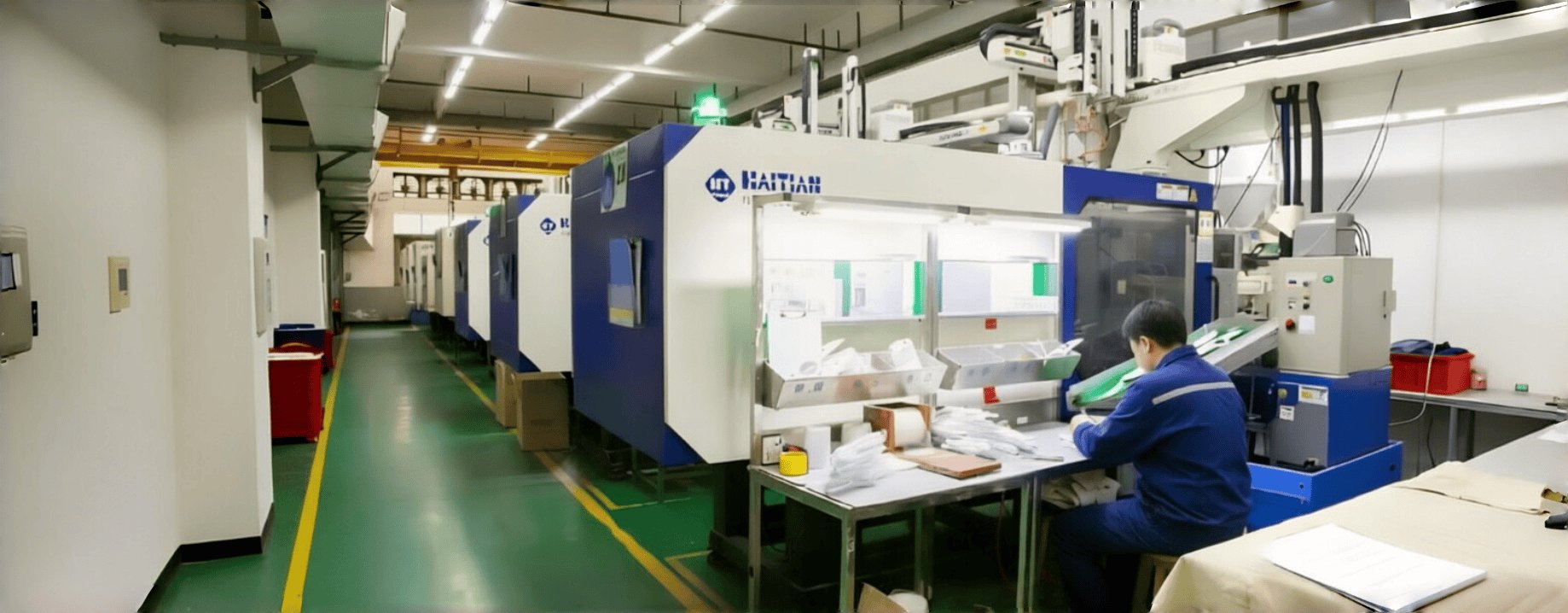
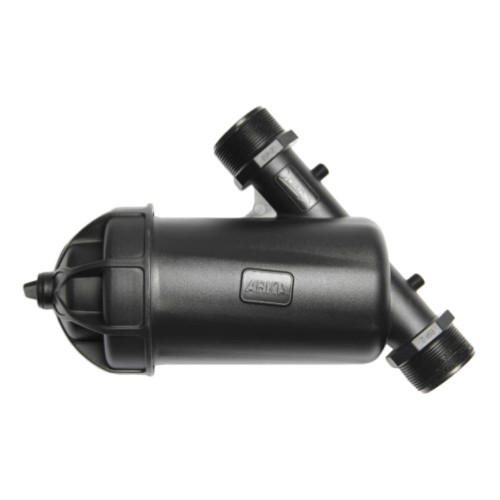
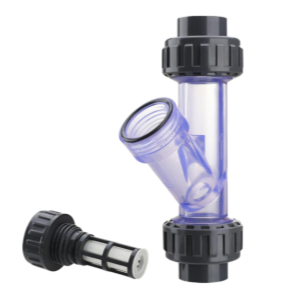
Plastic Y-type strainer Molding / Injection molding for water treatment systems
Y-type stacked filter injection molding has some challenges. How do you control complex internal cavity geometry, precise threading, and material performance matching?
Material selection: The material must balance corrosion resistance, impact strength, and sealing performance, and PP is prone to this. Since it's in long-term contact with water, it must resist bacterial growth and handle certain water pressures, so impact toughness can't be ignored. This is why we use food-grade modified PP.
Avoid weld lines and short shots: The filter is prone to having weld lines and short shots. We recommend multi-gate or hot-runner systems and strategically placed gates for even filling; also increase mold temperature and injection speed to improve melt flow and reduce cold slug marks.
Cooling design: Uneven cooling can easily lead to warpage. The main body is cylindrical, but the two end ports aren't symmetrical, so cooling rates vary a lot, which tends to cause warping. We build conformal cooling channels into the mold and control temperatures separately for thick and thin sections; we also use stripper plates to eject to avoid deformation.
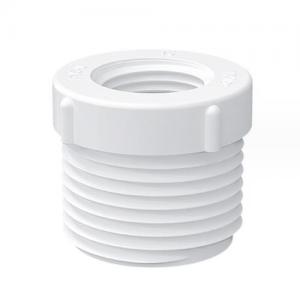
Molding Process control: The external threads on both ends demand tight dimensional accuracy, and it's easy to run into deformation during ejection or incomplete thread profiles: the wall thickness around the threads isn't uniform, cooling shrinkage varies, often causing distortion or out-of-tolerance dimensions. The solution is to use high-precision threaded cores with side-action slides for damage-free ejection; also, increase hold pressure and extend hold time during injection to compensate for shrinkage, ensuring the thread profiles are fully formed and dimensionally stable.
Processing Capabilities for Plastic Y-Type Strainers
Material (Housing): Nylon (PA6/PA66), PP, PVC, CPVC, PVDF, ABS, or custom engineering plastics
Disc Diameter: 5-500 mm (custom sizes available)
Shapes: Square, rectangular, round, oval, annular, kidney shape, fan-shaped, and fully custom designs
Filtration Accuracy: 50-1000 um (nominal or absolute rating)
Structure: Single layer, multiple layers, or composite structures with support mesh
Frame Style: Insert molding, ultrasonic welding, or heat staking
Connection Types: Threaded (BSP, NPT, Metric), socket weld, flange, hose barb, or custom connections
Port Size: 1/4" to 4" (DN8-DN100), custom sizes available
Pressure Rating: 0.6-1.6 MPa (6-16 bar), depending on material and design
Temperature Range: -40 C to 120 C (depending on housing material)
Sealing Method: O-ring, gasket, or integrated over-molded seal
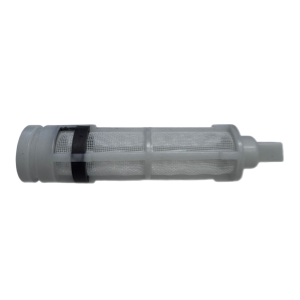
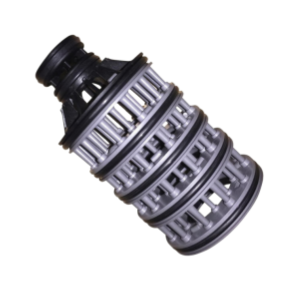
Assembly: Complete Y-type strainer assembly including housing, cap, mesh filter, and seals
Surface Finish: Smooth, textured, or custom finishes available
Color: Black, white, grey, or custom colors matched to customer requirements
Processing Tolerance: Diameter tolerance +/-0.1mm, Thickness tolerance +/-0.05mm
Certifications: ISO9001, ROHS, CE, food-grade options available
Applications: Water treatment, irrigation, chemical processing, HVAC, marine, and industrial fluid filtration
Manufacturing Challenges & Countermeasures
1. Housing Warpage & Deformation
Challenge: The Y-shaped housing (especially the angled junction) tends to warp or deform during cooling, affecting thread alignment and sealing performance.
Root Cause: Uneven wall thickness at the Y-junction; inconsistent cooling rates between thick and thin sections; insufficient packing pressure.
Countermeasure: Optimize mold design with balanced cooling channels; use CAE simulation to predict and correct shrinkage; increase packing pressure and time; adjust gate location to ensure uniform flow.
Challenge: The Y-shaped housing (especially the angled junction) tends to warp or deform during cooling, affecting thread alignment and sealing performance.
Root Cause: Uneven wall thickness at the Y-junction; inconsistent cooling rates between thick and thin sections; insufficient packing pressure.
Countermeasure: Optimize mold design with balanced cooling channels; use CAE simulation to predict and correct shrinkage; increase packing pressure and time; adjust gate location to ensure uniform flow.
2. Thread Quality & Dimensional Accuracy
Challenge: Threaded ports (BSP/NPT/Metric) may have incomplete threads, flash, or dimensional deviation, causing leakage or difficulty in installation.
Root Cause: Mold wear; insufficient injection pressure; improper mold temperature; poor venting at thread areas.
Countermeasure: Use hardened steel inserts for thread molds; optimize venting; maintain consistent mold temperature; implement in-process thread gauging; replace worn inserts promptly.
Challenge: Threaded ports (BSP/NPT/Metric) may have incomplete threads, flash, or dimensional deviation, causing leakage or difficulty in installation.
Root Cause: Mold wear; insufficient injection pressure; improper mold temperature; poor venting at thread areas.
Countermeasure: Use hardened steel inserts for thread molds; optimize venting; maintain consistent mold temperature; implement in-process thread gauging; replace worn inserts promptly.
3. Bypass Leakage
Challenge: Unfiltered fluid bypasses the mesh through gaps between the mesh edge and housing, reducing filtration efficiency.
Root Cause: Incomplete encapsulation; flash or short shot; frame warpage; mesh displacement; poor seal design.
Countermeasure: Optimize mold design for uniform encapsulation; increase clamping force; use over-molded seal; implement pressure testing for 100% inspection; anneal parts to reduce warpage.
Challenge: Unfiltered fluid bypasses the mesh through gaps between the mesh edge and housing, reducing filtration efficiency.
Root Cause: Incomplete encapsulation; flash or short shot; frame warpage; mesh displacement; poor seal design.
Countermeasure: Optimize mold design for uniform encapsulation; increase clamping force; use over-molded seal; implement pressure testing for 100% inspection; anneal parts to reduce warpage.
4. Internal Stress & Cracking
Challenge: Molded parts may develop internal stress, leading to cracks or premature failure under pressure.
Root Cause: Rapid cooling; excessive packing pressure; sharp corners or abrupt wall thickness transitions.
Countermeasure: Optimize cooling profile (gradual cooling); reduce packing pressure; design generous fillets and smooth transitions; post-mold annealing to relieve stress.
Challenge: Molded parts may develop internal stress, leading to cracks or premature failure under pressure.
Root Cause: Rapid cooling; excessive packing pressure; sharp corners or abrupt wall thickness transitions.
Countermeasure: Optimize cooling profile (gradual cooling); reduce packing pressure; design generous fillets and smooth transitions; post-mold annealing to relieve stress.
5. Surface Defects (Flow Marks, Sink Marks, Discoloration)
Challenge: Visual defects such as flow marks, sink marks, or discoloration affect appearance and may indicate structural weakness.
Root Cause: Improper melt temperature; low injection speed; insufficient holding pressure; contaminated material; poor mold surface finish.
Countermeasure: Optimize temperature profile; increase injection speed and holding pressure; ensure material purity; polish mold surfaces; use consistent color masterbatch.
Challenge: Visual defects such as flow marks, sink marks, or discoloration affect appearance and may indicate structural weakness.
Root Cause: Improper melt temperature; low injection speed; insufficient holding pressure; contaminated material; poor mold surface finish.
Countermeasure: Optimize temperature profile; increase injection speed and holding pressure; ensure material purity; polish mold surfaces; use consistent color masterbatch.
6. Assembly & Sealing Issues
Challenge: Improper assembly or seal installation can cause leakage at the cap or threaded connections.
Root Cause: Dimensional deviation of mating parts; damaged O-rings; insufficient torque during assembly; incompatible seal material.
Countermeasure: Maintain tight dimensional tolerances; inspect O-rings before installation; use torque-controlled assembly tools; select seal material compatible with the fluid and temperature.
Challenge: Improper assembly or seal installation can cause leakage at the cap or threaded connections.
Root Cause: Dimensional deviation of mating parts; damaged O-rings; insufficient torque during assembly; incompatible seal material.
Countermeasure: Maintain tight dimensional tolerances; inspect O-rings before installation; use torque-controlled assembly tools; select seal material compatible with the fluid and temperature.
7. Filtration Accuracy Deviation
Challenge: The actual filtration accuracy may deviate from the specified micron rating, affecting performance.
Root Cause: Inconsistent mesh quality; mesh damage during handling; improper over-molding causing partial blockage; incorrect mesh count.
Countermeasure: Source mesh from qualified suppliers with batch certification; handle mesh in clean environment; optimize over-molding parameters; perform bubble point or particle challenge testing on samples.
Challenge: The actual filtration accuracy may deviate from the specified micron rating, affecting performance.
Root Cause: Inconsistent mesh quality; mesh damage during handling; improper over-molding causing partial blockage; incorrect mesh count.
Countermeasure: Source mesh from qualified suppliers with batch certification; handle mesh in clean environment; optimize over-molding parameters; perform bubble point or particle challenge testing on samples.
Assembly, Seal & Quality Control
Seal & Gasket Installation: Install O-rings, gaskets, or integrated over-molded seals at all critical connection points to ensure a leak-proof assembly. Seal materials are selected for compatibility with the intended fluid and operating temperature.
Assembly: The complete Y-type strainer is assembled by inserting the filter mesh disc into the housing, securing the cap, and tightening all threaded connections. Each unit is checked for proper fit and alignment.
Quality Control & Testing: Every batch undergoes rigorous quality inspection, including: Dimensional verification (port size, thread pitch, overall length); Pressure testing (leak-proof performance at rated pressure); Filtration accuracy testing (micron rating verification); Visual inspection for defects (flash, warpage, discoloration).
Our Workflow
A transparent, step-by-step process from design to delivery - tailored for plastic Y-type strainers.
Stage 1: R&D Support - We support customer R&D for Y-type strainer applications. Create the files or improve the design if needed (UG, SolidWorks, ProE, AutoCAD, etc.). We help optimize housing geometry, port size, thread type, mesh selection (mesh count, wire diameter, material), and sealing design for your specific fluid filtration requirements.
Stage 2: Mold Process - Mold design (DFM report) -> check/approve -> approved -> make mold -> produce sample -> sample confirmed -> check final mold quality ready to export. Includes housing mold, cap mold, thread inserts, and mesh cutting die design.
Stage 3: Sample Modification - If the first sample does not meet the customer's requirements (e.g., pressure rating, thread fit, sealing performance, or filtration accuracy), we can modify the mold to meet them.
Stage 4: Sample Delivery - Produce the customer's requested quantity of Y-type strainer samples, with free shipping.
Stage 5: Final Delivery - Deliver goods by sea or air; we can accommodate special requirements based on customer demands. Packaging options are available to protect strainers from damage, deformation, and contamination during transport.
Why Choose Yixing Technology?
Partner with a trusted leader in precision plastic Y-type strainer manufacturing.
20+ Years Experience - We have successfully produced more than 1500 new injection molds and parts since 2006. Extensive experience in molding Y-type strainer housings, caps, threaded connections, and over-molded filter mesh discs.
ISO9001 Certificated - Strict quality control system, providing ROHS/CE certification for your peace of mind. We inspect each Y-type strainer batch for dimensional accuracy, thread quality, pressure resistance, sealing performance, and filtration efficiency.
One Stop Service - We provide more value-added operations to simplify your supply chain from design to delivery. From housing injection molding and mesh die-cutting to over-molding, assembly, pressure testing, and global shipping - all under one roof.
Start Your Quote Here
CATEGORIES
LATEST NEWS
CONTACT US
- Mobile: +8615000908770
- Tel: +86-21-51662821
- WhatsApp: 8615000908770
- Email: contact@yxplasticmolding.com
- Address: Room 323, Building B, Hongchun Business Park, No. 980 Qinghewan Road, Qingpu District, Shanghai