Our Advantages in Metal Enclosure Stamping and Manufacturing
Metal enclosures are the protective backbone of modern electronics, widely used in servers, switches, industrial PCs, and power supplies. Typically materials like SECC, galvanized steel, 5052/6061 aluminum alloy, and SUS304 stainless steel, these parts demand a balance of structural integrity and cosmetic finish. At Yixing Technology, we provide a comprehensive One-Stop Solution that adapts to your specific needs.
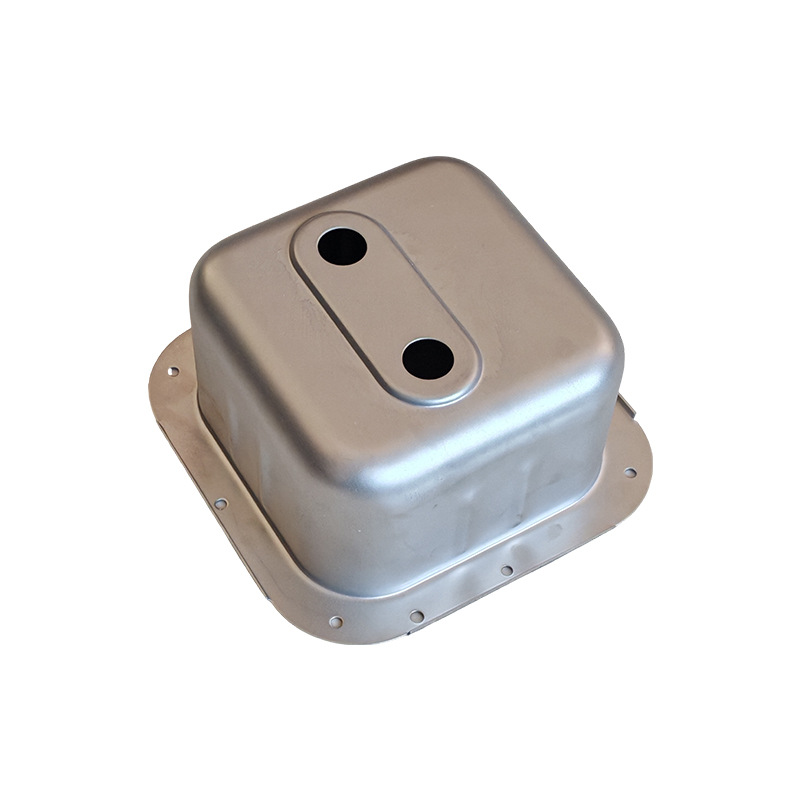
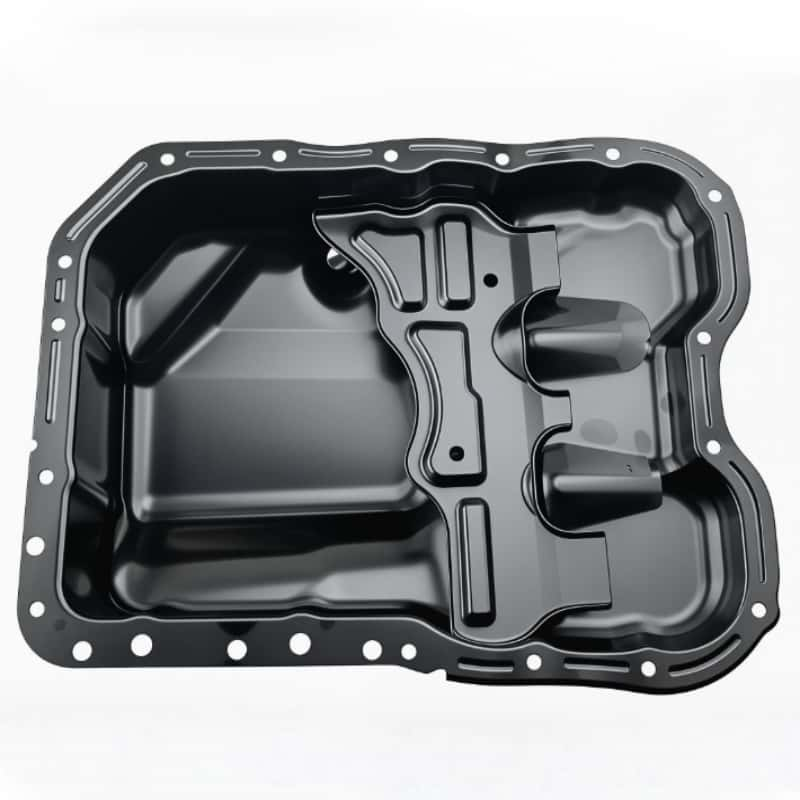
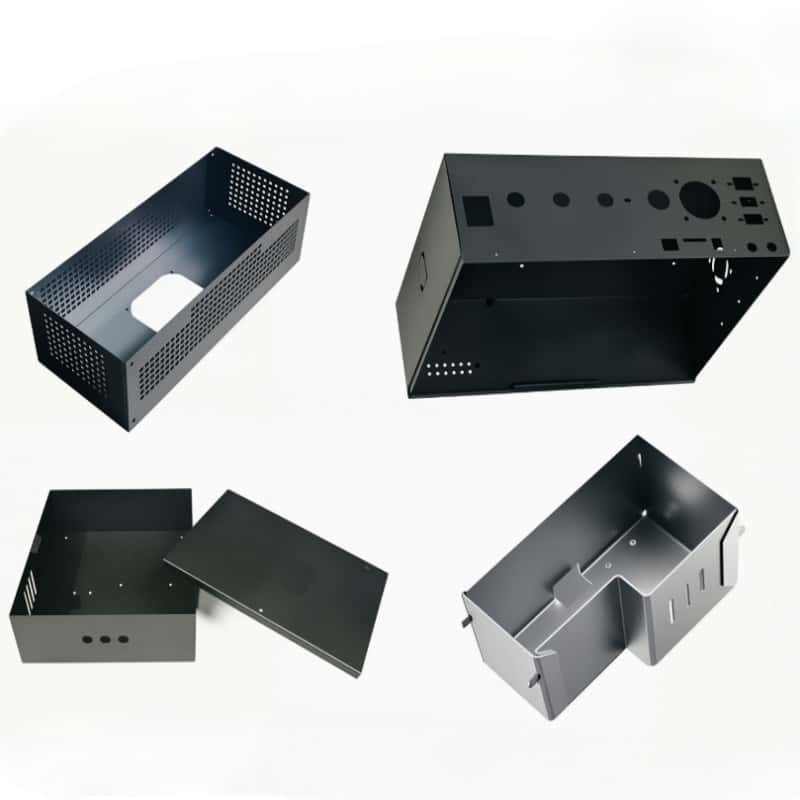
Stamped Metal Enclosure Capability
| Parameter | Specification |
| Applicable Materials | SECC, SGCC (galvanized steel), 5052 / 6061 aluminum, SUS304 stainless steel |
| Sheet Thickness Range | 0.5–4.0 mm |
| Dimensional Tolerance | ±0.05 mm (typical); ±0.02 mm (precision) |
| Flatness | ≤ 0.05 mm / 100 mm |
| Perpendicularity | ≤ 0.05 mm / 100 mm |
| Process Types | Progressive die (high volume) / Transfer die (medium volume) / Mold-free (low volume) |
| Surface Quality (Visible Face) | Mirror polished, Ra ≤ 0.4 µm; no orange peel, scratches, or tool marks |
| Die Steel | SKD11, DC53, Tungsten carbide (YG20 / YC20C) |
| Die Life | ≥1,000,000 strokes (progressive); ≥500,000 strokes (transfer) |
| Stamping Speed | 200–1,200 SPM (progressive); 15–60 SPM (transfer) |
| Press Tonnage Range | 100T–800T |
| Mold Lead Time | 25-35 days |
| Mold-Free Lead Time | 5–15 days (prototype); 10–20 days (small batch) |
Material We supported
| Material | Typical Grade | Thickness | Characteristics |
| Steel | DC01/DC04 | 0.5–3.0 mm | Need secondary process |
| Galvanized Steel | G90/ DC01+ZF270/SECC / SGCC | 0.5–3.0 mm | Good corrosion resistance, weldable, cost-effective |
| Aluminum | 5052 / 5754/ 6061 | 0.5–4.0 mm | Lightweight, corrosion-resistant, high springback |
| Stainless Steel | SUS304 SUS 316 | 0.5–3.0 mm | Excellent corrosion resistance, high strength, work-hardening |
Metal Enclosure Surface Finishing We work
After stamping, metal enclosures typically require surface finishing to improve corrosion resistance, appearance, and durability. Below are the most common post-processing methods.
1. Anodizing
Best for: Aluminum
An electrochemical process that forms a protective oxide layer on aluminum. Can be clear, dyed in various colors, or hard anodized for wear resistance.
- Thickness: 5–25 µm (decorative); 25–50 µm (hard anodized)
- Colors: Natural, black, blue, red, gold, etc.
- Advantages: Corrosion resistance, scratch resistance, non-conductive, premium appearance
2. Electrophoresis / E-Coating
Best for: Steel, aluminum, galvanized steel
An immersion process where paint particles deposit uniformly on the metal surface under electrical current. Excellent for complex shapes and edges.
- Thickness: 15–30 µm
- Colors: Black, gray, custom colors
- Advantages: Uniform coverage, excellent corrosion resistance, eco-friendly
3. Powder Coating
Best for: Steel, aluminum, galvanized steel
Dry powder is electrostatically sprayed onto the surface and cured under heat to form a hard, durable finish.
- Thickness: 60–120 µm
- Colors: Wide range (RAL colors), textured or smooth
- Advantages: Thick, durable, impact-resistant, environmentally friendly
4. Zinc Plating
Best for: Steel, SECC, SGCC
An electroplating process that deposits a zinc layer on steel for corrosion protection. Can be clear, blue, yellow, or black chromate.
- Thickness: 5–15 µm
- Colors: Clear, blue, yellow, black
- Advantages: Excellent corrosion resistance, low cost, good conductivity
5. Brushing
Best for: Aluminum, stainless steel
A mechanical surface treatment that creates a unidirectional satin texture using abrasive belts or brushes.
- Finish: Hairline, satin, non-directional
- Ra Value: 0.4–1.6 µm
- Advantages: Premium aesthetic, hides fingerprints and scratches, ideal for consumer electronics
Metal Enclosure Applications
Our metal enclosures serve a wide range of industries and products:
- Server chassis – data centers and cloud infrastructure
- Network switch / router housings – telecom and enterprise networking
- Industrial PC enclosures – factory automation and control systems
- Power supply housings / heat sinks – energy and thermal management
- Instrument & meter cases – measurement, testing, and medical devices
From IT and telecom to industrial and energy sectors, we deliver precision stamped enclosures for every application.
Process Selection Guide
| Process | Best For | Volume | Lead Time | Tooling Cost |
| Progressive Die | High-volume enclosures, complex features | 100K+ pcs | 25–45 days | High |
| Transfer Die | Medium-volume, larger enclosures | 10K–100K pcs | 20–35 days | Medium |
| Mold-Free | Prototypes, low-volume, design validation | 1–5,000 pcs | 5–20 days | Low |
1. Multi-Station Precision Progressive Dies (high quantity)
Designed for high-volume, standardized production of components like small power supply enclosures and network module housings, our progressive dies set the benchmark for efficiency and quality.
Our Advantages:
1) Fully Automated
We integrate all the stamping processes—including punching, embossing, blanking, flanging, and tapping—within a single progressive die. This fully automated system maximizes product consistency and minimizes labor costs.
2) Dimension Stability
We use high-rigidity mold steel, combined with dual guiding systems, to ensure consistent accuracy after the final stamping, meeting the tight tolerances required for assembly.
3) High Surface Quality
For visible components, we apply mirror finishing to mold cavities. This prevents surface scratches and ensures a perfect surface after the stroke.
2. Multi-Station Transfer Dies (medium quantity)
For complex structures requiring deep drawing and complex shape forming—such as server chassis and large equipment cabinets—our transfer dies offer greater flexibility and control.
Our Advantages:
1) More Flexibility but highly automated
Robotic arms provide precise, flexible transfer between different molds, enabling complex operations including deep drawing, side piercing, and side flanging that would be impossible in progressive dies.
2) Precision Process Control
Hydraulic and servo control systems allow us to finely control forming dimensions, effectively preventing common defects like wrinkling and cracking.
3) Maintenance easier
Since each mold is independent, we can quickly repair or replace a single unit without affecting the others.
3. Mold-Free Manufacturing: Rapid Solutions
By eliminating the mold design and manufacturing phase, we can deliver finished enclosure samples in days rather than weeks, allowing you to test your product in the market immediately.
Our Process Flow
1. DFM – Review drawings, strip layout, stations, clearance, springback.
2. Die Manufacturing – CNC, wire EDM, sinker EDM, grinding, heat treatment, coating, inspection.
3. Die Assembly – Assemble plates, punches, pilots, springs; set clearance and feed.
4. Trial Run (T1) – Mount die, run samples, check dimensions, burr, angle; adjust.
5. Small Batch – 500–5,000 pcs; CPK/PPK, tool wear, plating, PPAP approval.
6. Mass Production – High-speed stamping, SPC, maintenance, plating, packaging.
Why Choose Yixing Technology?
Our company excels in meeting these requirements by our advanced process capabilities and expertise:
1. ULTRA-PRECISIONTo ensure reliable assembly and seamless fit, critical features such as dimensions, flatness, and perpendicularity must be held within tolerances of ±0.05 mm. This requires molds with superior precision. Our machining equipment's tolerances reach ±2 µm, significantly exceeding the standards of stamping dies.
2. FLAWLESS SURFACE FINISHTo ensure premium appearance and flawless coating, enclosure surfaces must be free of burrs, scratches, and tool marks. Our molds feature sharp cutting edges and precisely controlled clearances, enabling clean, burr-free stamping with mirror-polished visible faces (Ra ≤ 0.4 µm).
3. MULTI-PROCESS INTEGRATIONModern enclosures often require multiple forming operations—such as blanking, bending, deep drawing, trimming, and flanging. Our mold designers specialize in creating complex, multi-process molds to match clients’ requirements.
4. HIGH-QUALITY MOLD.To support continuous and high-speed operation, our molds are made from high-rigidity, high-toughness materials, such as SKD11, DC53, and tungsten carbide alloys, ensuring durability and long service life.
FAQ
Send Your Message
Feel free to contact us. We are ready to assist you.
Start Your Quote Here
CATEGORIES
LATEST NEWS
CONTACT US
- Mobile: +8615000908770
- Tel: +86-21-51662821
- WhatsApp: 8615000908770
- Email: contact@yx-molding.com
- Address: Room 323, Building B, Hongchun Business Park, No. 980 Qinghewan Road, Qingpu District, Shanghai