Automotive Parts Stamping Service
Automotive parts stamping are the backbone of modern vehicle manufacturing. At Yixing Technology, we specialize in designing and producing a full range of high-precision stamping dies—from structural body parts, pillars, and brackets to door lock components and braking systems. Our expertise spans across low-carbon steel, advanced high-strength steel (AHSS/UHSS), and aluminum alloys.
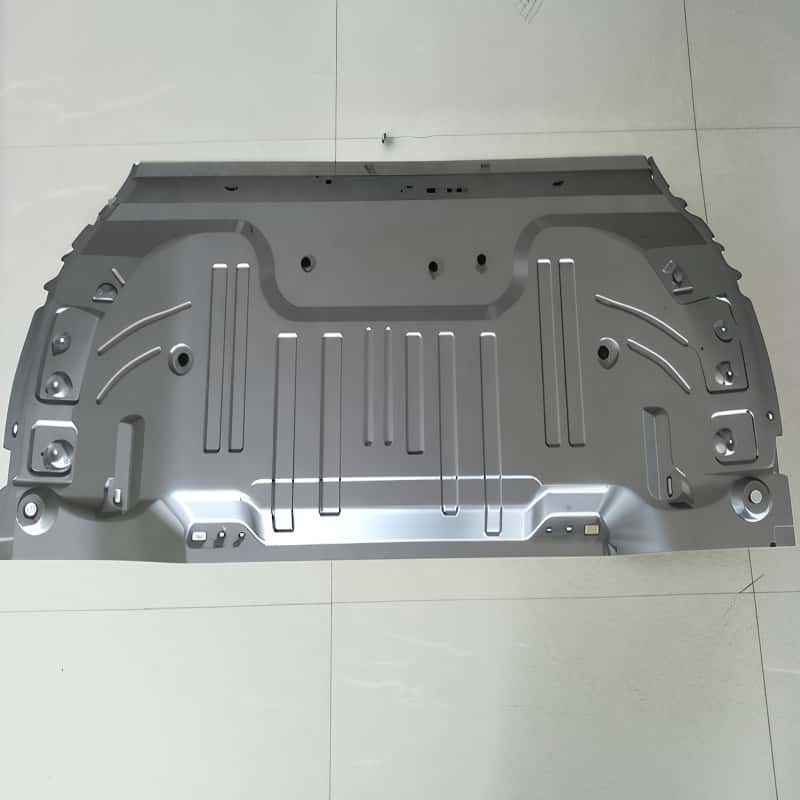
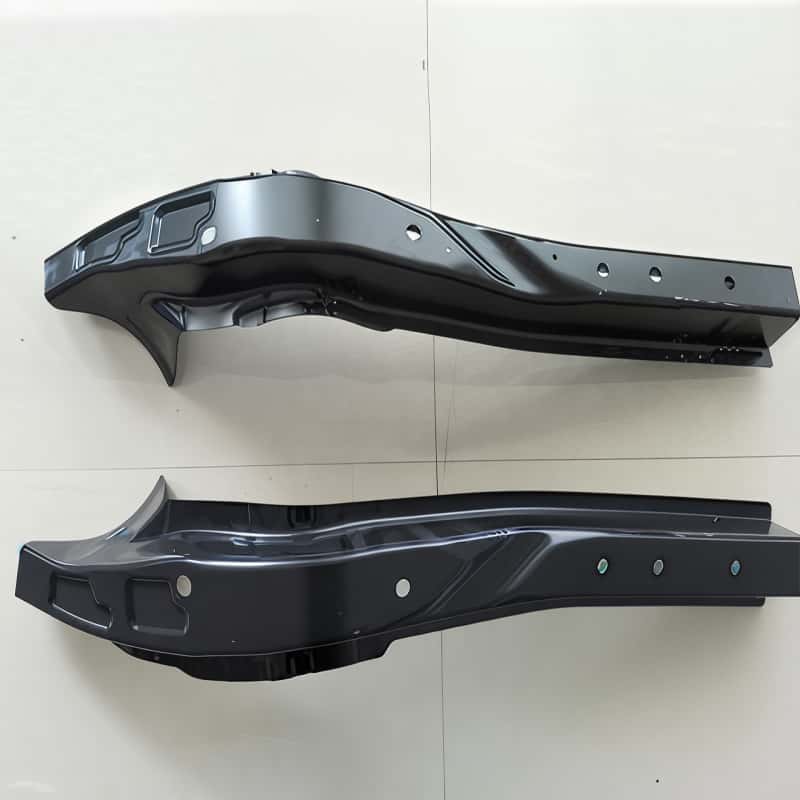
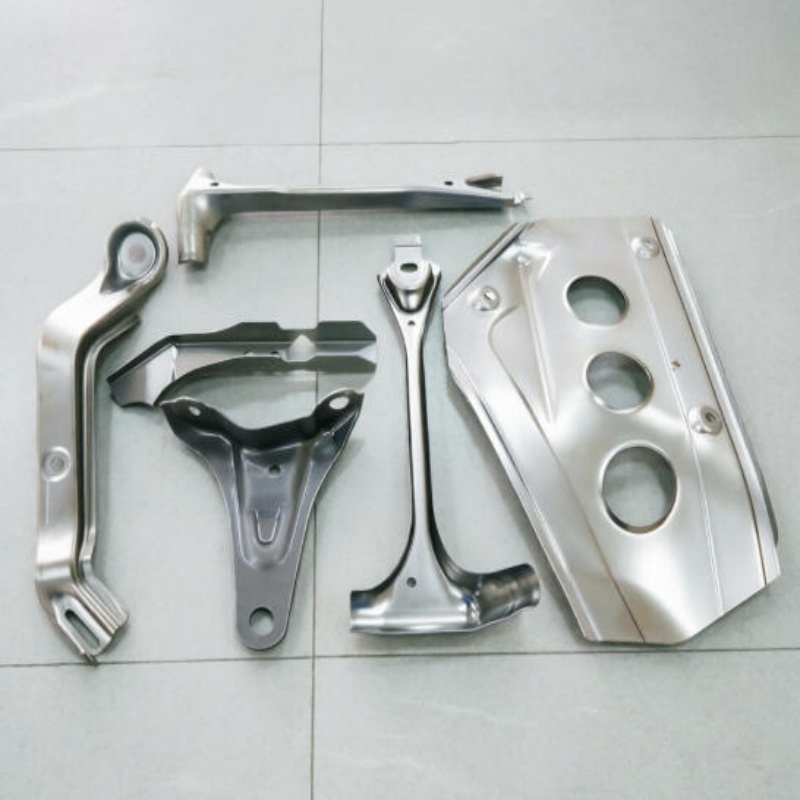
Our Automotive Stamping Parts Capability
| Parameter | Specification |
|---|---|
| Applicable Materials | Low-carbon steel, JIS SAPH310/370/400/440, AHSS (DP / TRIP), UHSS (hot-formed boron steel), Aluminum alloy |
| Sheet Thickness Range | 0.5–3.2 mm (general steel); 1.6–14.0 mm (SAPH series) |
| Forming Tonnage Range | 25T–1000T |
| Process Types | Drawing / Trimming & Piercing / Flanging & Restriking (+ multi-directional) |
| Dimensional Tolerance | ±0.05–0.1 mm (precision parts); general stamping per QC/T 268 |
| Springback Compensation Accuracy | ±0.05 mm (CAE iterative compensation for AHSS/UHSS) |
| Surface Roughness (Class A) | Ra ≤ 0.8 µm (outer panels); Ra 1.6–3.2 µm (structural parts) |
| Die Steel | SKD11, DC53, Tungsten carbide (YG20 / YC20C) |
| Die Life | ≥500,000 strokes (general); ≥300,000 strokes (dedicated) |
| Die Hardness | 58–60 HRC |
Material We support
| Material | Typical Grade / Strength | Thickness Range | Stamping Characteristics |
| Low-Carbon Steel | DC04 / DC06, σb 270–350 MPa | 0.8–3.2 mm | Good formability, low springback |
| JIS SAPH310 | σb ≥310 MPa, σs ≥185 MPa | 1.6–14.0 mm | Good formability, chassis/floor parts |
| JIS SAPH370 | σb ≥370 MPa, σs ≥225 MPa | 1.6–14.0 mm | Frame rails, control arms |
| JIS SAPH400 | σb ≥400 MPa, σs ≥255 MPa | 1.6–14.0 mm | Side rails, bumper brackets |
| JIS SAPH440 | σb ≥440 MPa, σs ≥305 MPa | 1.6–14.0 mm | Heavy-duty chassis, suspension arms |
| AHSS – DP | DP600–DP800, σb 580–980 MPa | 0.8–2.5 mm | Springback control required |
| AHSS – TRIP | TRIP600–TRIP780, σb 600–800 MPa | 0.8–2.5 mm | Better elongation than DP |
| UHSS – Hot-Formed Boron | 22MnB5, σb ≥1500 MPa | 1.0–2.5 mm | Hot stamping, water-cooled die |
| Aluminum Alloy | 5052 / 6016, σb 210–500 MPa | 0.5–4.0 mm | High springback, anti-galling needed |
What kind parts we can make ?
- Body panels – door, fender, hood (Class A surface)
- Structural parts – B-pillar, bumper beam, brackets
- Chassis parts – frame rails, cross members, suspension arms
- Functional parts – brake components, door lock parts
From outer panels to safety-critical structural and functional parts, we deliver precision stamping for every automotive application.
Process Selection Guide
We understand that the automotive industry demands both high quantity and small quantity for repair market. Therefore, we offer High-Precision Stamping Dies for volume production and Flexible Mold for small quantity.
1. High-Precision Stamping Dies for Volume Production
Our engineer design our molds to handle the rigorous demands of automotive production and ensure them longevity and precision.
The Precision Stamping Dies we made:
1) Drawing/Forming Dies
These dies are developed from complex Class A surface data and demand exceptional precision.
Reasonable design to Optimize Material Flow Control – Through Design and simulation, we precisely regulate material movement to prevent cracking and wrinkling, even in deep-drawn panels.
High-strength and high-toughness mold materials – Our molds are engineered using premium mold materials such as SKD11, DC53, and tungsten carbide. This can ensure large-tonnage forming pressures with minimal deflection, ensuring dimensional stability over long production runs.
Excellent Surface – Designed specifically for visible body panels, our forming molds deliver superior surface quality free from defects.
2) Trimming and Piercing Dies
Designed for cutting excess material and making functional holes.
3D Trim Capability – Our three-dimensional cutting-edge designs handle complex trimming contours with precision.
Multi-Directional stamping design – Integrated Multi-Directional stamping systems enable efficient side piercing and trimming in a single press stroke, reducing mold cost.
3) Flanging and Reshaping Dies
The final shaping operation that determines the part geometry dimension.
Spring back Compensation designing – We use CAE simulation to predict spring back and make precise corrections in the molds, ensuring final parts meet tight tolerances.
Integrated Multi-Directional stamping designing – Directional stamping units to accomplish complex flanging and reshaping operations in a single station.
High-precision mold parts and “zero” clearance – As the final sizing operation, our molds deliver consistent part geometry.
2. Flexible Mold: Rapid Solutions for Auto Parts
We utilize Flexible Mold to produce small quantity. It’s very quick to manufacture complex automotive brackets, chassis components, and structural parts directly from CAD data. Reduce the long time for mold manufacturing and tooling cost.
| Process Type | Best For | Volume | Tooling Cost | Lead Time |
| Drawing (Forming) | Complex shapes, deep cavities | 100K+ pcs | High | 6–10 weeks |
| Trimming & Piercing | Hole cutting, edge trimming | 100K+ pcs | Medium | 4–6 weeks |
| Flanging & Restriking | Edge forming, multi-directional bends | 100K+ pcs | Medium | 4–6 weeks |
Our Workflow with PPAP Integration — Metal Stamping for Automotive Parts
PPAP (Production Part Approval Process) is a core quality gate in the automotive supply chain. For a metal stamping supplier, PPAP is not an extra step after delivery — it runs through the entire process from design to mass production.
Below is our workflow for automotive stamped parts.
Stage 1: R&D Support
PPAP Corresponding Element: Design Record Confirmation
While supporting customer R&D or creating and improving design files (UG, SolidWorks, ProE, AutoCAD, etc.), we simultaneously confirm the completeness and version consistency of the Design Record. This is the first of the 18 PPAP elements, requiring the supplier to hold the correct version-level drawings, assembly drawings, and material specifications.
Stage 2: Stamping Process — The Core PPAP Stage
PPAP Level 3 is the default submission level for automotive stamped parts. Level 3 requires submission of the PSW plus complete supporting data. The following PPAP core documents must be produced at this stage:
DFM Report → Design Confirmation
DFMEA (Design Failure Mode and Effects Analysis) is initiated during the die design stage (if the supplier holds design responsibility). The DFMEA must identify potential failure modes, effects, causes, and current controls, and calculate the Risk Priority Number (RPN).
Die Manufacturing → Sample Production
PPAP samples must come from a "significant production run" using production dies, presses, and operators. Samples must be individually labeled as "PPAP" and not mixed with regular parts.
PPAP Documents Required at This Stage
| PPAP Document | Requirement |
| Process Flow Diagram (PFD) | Clearly describes each step and sequence from coil receiving to final inspection. |
| Process FMEA (PFMEA) | Identifies how stamping steps can fail, the effects, and causes; evaluates RPN; defines recommended actions. |
| Control Plan | Defines control methods, sample size/frequency, test equipment, and reaction plan for each stamped characteristic. |
| MSA (Measurement System Analysis) | Gage R&R studies for all critical characteristics to ensure measurement system variation is acceptable. |
| Dimensional Results | Full dimensional inspection records for each die station; PPAP samples must be traceable to the dimensional report. |
| Material/Performance Test Results | Material certificates and performance test reports (including lab name, date, and standard). |
| Springback & Formability Report | CAE simulation and actual measurement comparison for drawing and forming stations. |
Key Acceptance Criteria: Initial process capability studies require Cpk ≥ 1.67 for critical dimensions. If Cpk falls between 1.33 and 1.67, customer review is required; below 1.33 requires 100% inspection or corrective action.
Stage 3: Sample Modification
After sample modification, PPAP must be resubmitted. Any die design change (station layout, punch/die clearance, bending radius, draw ratio) triggers PPAP resubmission. Modified samples require re-inspection, and the PFMEA and Control Plan must be updated accordingly.
Stage 4: Sample Delivery
PSW (Part Submission Warrant) is signed and submitted at this stage. The PSW is the summary document of PPAP. By signing the PSW, the supplier declares:
· All PPAP requirements have been met.
· Parts conform to drawing and specification requirements.
· Production was completed on the declared dies, press tonnage, and production line.
Stage 5: Final Delivery
PPAP approval is a prerequisite for mass production delivery. Formal shipments can only begin after the customer signs the PSW. Meanwhile, the Master Sample must be retained at the supplier as a reference standard for future visual and dimensional comparisons.
Our Stamping Process Flow with PPAP
DFM Design → Die Manufacturing (CNC / Wire EDM / EDM) → Die Assembly → Trial Run (T1) → Small-Batch Validation → PPAP Approval → Mass Production
1. DFM Design – Review drawings, part geometry, strip layout, stations, clearance, springback compensation.
2. Die Manufacturing – CNC, wire EDM, sinker EDM, grinding, heat treatment, coating, inspection.
3. Die Assembly – Assemble plates, punches, pilots, springs; set clearance and feed.
4. Trial Run (T1) – Mount die, run samples, check dimensions, springback, burr, surface; adjust.
5. Small-Batch Validation – 500–5,000 pcs; CPK/PPK studies, tool wear check, dimensional layout, material certification.
6. PPAP Approval – Submit PPAP documents: dimensional results, material certs, process flow, PFMEA, control plan, MSA, capability studies, sample parts. Obtain customer sign-off.
7. Mass Production – High-speed stamping, SPC, scheduled die maintenance, PPAP-compliant process control, packaging, shipment.
Why Choose Yixing Technology?
1. IATF 16949 Track Record
We are an IATF 16949-certified company with a proven track record in automotive stamping. We have successfully delivered a wide range of stamped parts — including body panels, structural reinforcements, bumper beams, chassis brackets, and various connectors — each fully traceable through our quality department.
2. Forming Simulation Before Die Start
We use AutoForm / CAE simulation software to analyze and optimize material flow, predict springback and deformation, and control wrinkle and crack risks before die manufacturing begins.
3. Precision Machining & Inspection Equipment
Our facility is equipped with state-of-the-art 5-axis high-speed milling machines and precision EDM equipment. Inspected with CMM and 3D scanning technologies, we fully control the manufacturing process, guaranteeing strict dimensional accuracy.
4. High-Quality Die Steel
By vacuum quenching and cryogenic treatment, we achieve high-strength, high-toughness, wear-resistant die steel. After high-grade mirror polishing, die components ensure long-term dimensional stability and extended die life.
5. Systematic Die Test & Validation
Comprehensive testing — including dimensional inspection, performance evaluation, and environmental simulations — ensures we meet our customers' PPAP requirements.
6. Deep Drawing & Multi-Process Expertise
We specialize in multi-station progressive and transfer dies, integrating drawing, trimming, piercing, flanging, and restriking into one die — delivering complex automotive parts with high efficiency and consistency.
With systematic engineering, strict quality control, and 20+ years' die experience, we provide automotive customers with high-reliability, long-life stamping solutions.
FAQ
Send Your Message
Feel free to contact us. We are ready to assist you.
Start Your Quote Here
CATEGORIES
LATEST NEWS
CONTACT US
- Mobile: +8615000908770
- Tel: +86-21-51662821
- WhatsApp: 8615000908770
- Email: contact@yx-molding.com
- Address: Room 323, Building B, Hongchun Business Park, No. 980 Qinghewan Road, Qingpu District, Shanghai