PEEK and Moldable PTFE Injection Molding Solutions
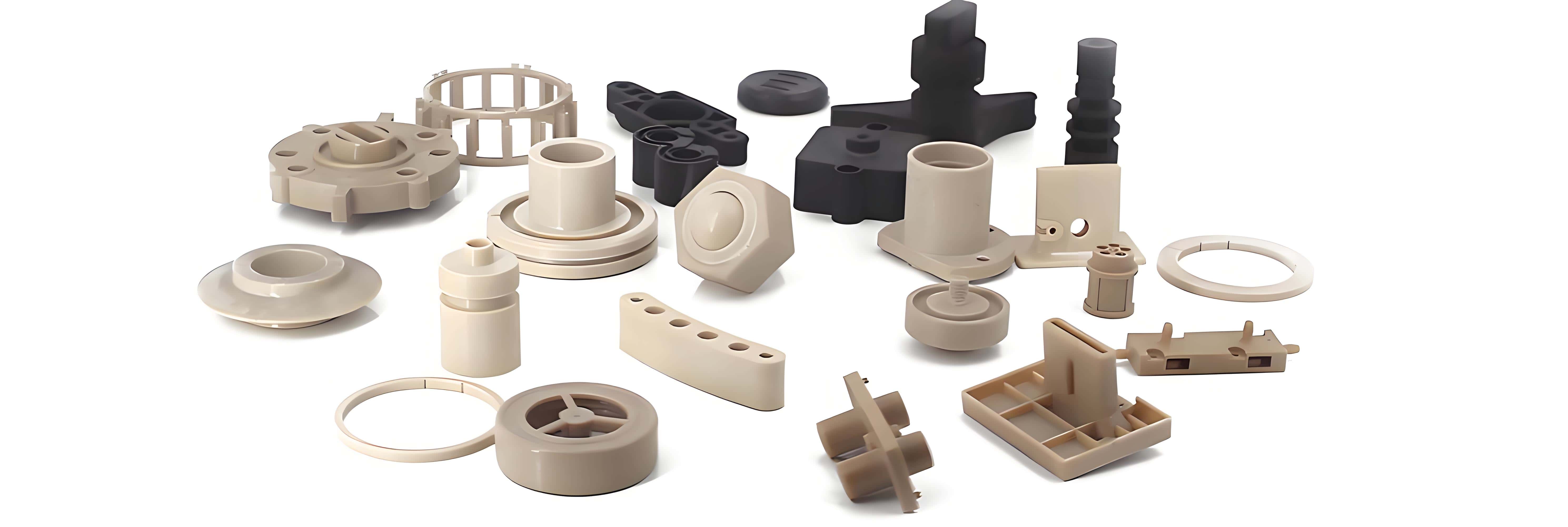
PEEK is a high-performance engineering plastic that requires specialized injection molding processes. Melting temperatures must reach 370–400°C, and mold temperatures are tightly controlled at 160–200°C to manage crystallization. Additionally, the material's high abrasiveness and thermo-sensitivity present significant challenges.
PTFE, on the other hand, is a different story. When we talk about "injection moldable PTFE," we're really talking about PFA, FEP, and ETFE — melt-processable fluoropolymers that behave more like conventional thermoplastics.
PFA (processable PTFE) is the closest injection-moldable cousin to PTFE. Melt temperatures need to reach 350–400°C, and molds must be heated to 150–200°C — which almost perfectly overlaps with PEEK's 360–400°C / 160–200°C window. But PFA has a headache that PEEK doesn't: in the molten state, it corrodes standard steel. Screws, barrels, and molds all need corrosion-resistant alloys, and mold cavities are best nickel-plated. PFA also has fairly high melt viscosity, so gates and runners need to avoid sharp corners — otherwise you get melt fracture.
FEP processes at slightly lower temperatures but still needs dedicated corrosion-resistant equipment. Its upper service temperature is around 200°C, lower than both PFA and PTFE, so it's limited in high-temperature applications.
ETFE is the "easiest to mold" of the bunch. Melt temperature is 293–343°C, mold temperature only 65–149°C — much gentler than PEEK or PFA. Its tensile strength is also on the higher side for this family, around 45 MPa. Still nowhere near PEEK, but a "tough guy" among fluoroplastics.
| Characters | PEEK | Injection-Moldable Fluoropolymers (PFA/FEP/ETFE) |
|---|---|---|
| Corrosivity | Basically non-corrosive to metal; standard wear-resistant screw works | PFA/FEP molten resin corrodes steel — nickel-based alloys or chrome plating required |
| Melt Flow | Viscous, but still a "normal" thermoplastic | Extremely high melt viscosity; injection speed must be very slow — a single shot can take 60 seconds; go faster and you get melt fracture |
| Why Heat the Mold | To control crystallinity, which affects final mechanical properties | To let the melt fill the cavity — the fluoropolymer is already essentially fully crystallized |
| Demolding | Relatively normal; proper draft angles are enough | Difficult — fluoroplastics are so "slippery" they're hard to grip; special ejection design needed |
| Post-Processing | Usually needs annealing to relieve internal stress and stabilize dimensions | Generally not needed, but shrinkage is high — mold design must compensate for it upfront |
PEEK vs. PFA, FEP & ETFE — Comprehensive Comparison
| Property | PEEK (Unfilled) | PFA | FEP | ETFE |
|---|---|---|---|---|
| Tensile Strength | 97–100 MPa | ~20–27 MPa | ~17–20 MPa | ~34–45 MPa |
| Flexural Modulus | 3.8–4 GPa | ~0.55–0.9 GPa | ~0.65–0.9 GPa | ~1.4 GPa |
| Working Temperature | Long-term 250°C | Continuous 260°C | Continuous ~204°C | Continuous ~150°C |
| Wear Resistance | Good, self-lubricating | Low; prone to creep, not for high-load wear | Low; similar to PFA, soft | Best among fluoropolymers; tough, abrasion resistant |
| Chemical Resistance | Very broad (pH 2–14), not resistant to strong oxidizing acids | Near-universal; similar to PTFE | Near-universal; similar to PTFE | Good, but not universal; less resistant than PFA/FEP, especially to strong bases |
| Typical Applications | Precision structural parts, bearings, seals, medical implants | High-purity fluid handling, semiconductor components, chemical delivery systems | Cable liners, sensor tubing, low-friction sleeves | Wire insulation, chemical tank linings, thin-wall abrasion-resistant parts |
How to Get Qualified PEEK and Moldable PTFE Parts
1. Superior Materials for PEEK & Teflon Molds
We manufacture PEEK & Teflon mold components from carbide and premium powder metallurgy steels, precision-machined and mirror-polished for optimal performance. Optional wear-resistant coatings further extend mold life. This ensures dimensional stability and longevity under continuous high-temperature, high-pressure operation.
2. Precision Temperature Control for Crystallization
Our molds feature independently controlled heating and cooling circuits with high-accuracy controllers capable of ±1°C precision. Thermal insulation between plates minimizes heat loss, ensuring uniform temperature distribution and consistent part quality.
3. Optimized Flow and Venting
Hot runner systems are designed with enlarged runners and gates to reduce shear heat and flow resistance, preventing material degradation and ensuring smooth filling.
4. Special Ejection & Cooling Systems
Stainless steel cooling circuits eliminate corrosion risks and ensure consistent heat dissipation over the long term. Ejection systems are specifically engineered for reliable high-temperature operation.
Our Workflow
A transparent, step-by-step process from design to delivery.
Stage 1: R&D Support
We support customer R&D. Create the files or improve the design if needed (UG, SolidWorks, ProE, AutoCAD, etc.).
Stage 2: Mold Process
Mold design (DFM report) → check/approve → approved → make mold → produce sample → sample confirmed → check final mold quality ready to export.
Stage 3: Sample Modification
If the first sample does not satisfy the customer, we can modify the mold to meet customers' requirements.
Stage 4: Sample Delivery
Produce the customer's requested quantity, free shipping.
Stage 5: Final Delivery
Deliver goods by sea or by air; special requirements can be accommodated based on customer demands.
Why Choose Yixing Technology?
Partner with a trusted leader in precision injection molding.
20+ Years Experience
More than 1500 new injection molds and parts have been successfully produced since 2006.
ISO9001 Certificated
Strict quality control system, providing ROHS/CE certification for your peace of mind.
One Stop Service
More value-added operations provided to simplify your supply chain from design to delivery.
FAQ
Send Your Message
Feel free to contact us. We are ready to assist you.
Start Your Quote Here
CATEGORIES
LATEST NEWS
CONTACT US
- Mobile: +8615000908770
- Tel: +86-21-51662821
- WhatsApp: 8615000908770
- Email: contact@yxplasticmolding.com
- Address: Room 323, Building B, Hongchun Business Park, No. 980 Qinghewan Road, Qingpu District, Shanghai