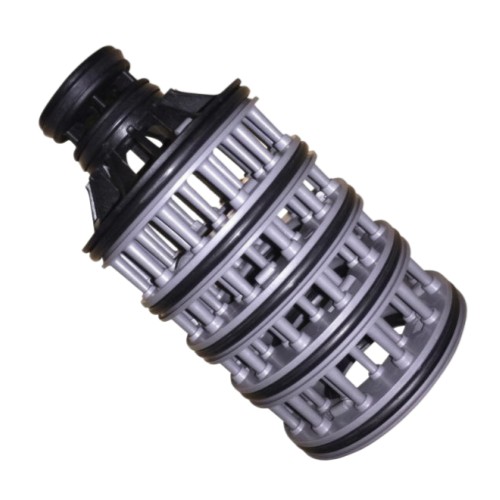
Filter Cartridge Molding / Multi-stack Disc Water Filter Element Injection Molding
Processing Capabilities for PP Filter Cartridge
| Item | Detailed Capabilities |
|---|---|
| Material (Housing/Cage) | PP (Polypropylene), Nylon (PA6/PA66), ABS, or custom engineering plastics |
| Material (Filter Media) | PP |
| Disc Diameter | 5–500 mm (custom sizes available) |
| Cartridge Outer Diameter | 50–300 mm (custom sizes available) |
| Cartridge Length | 5" to 40" (127–1016 mm), custom lengths available |
| Shapes | Cylindrical, pleated, multi-layered, conical, or fully custom designs |
| Filtration Accuracy | 1–1000 μm (nominal or absolute rating) |
| Structure | Single layer, multiple layers, pleated, or composite structures with inner core and outer cage support |
| Frame Style | Insert molding, ultrasonic welding, heat staking, or snap-fit assembly |
| Connection Types | Threaded (BSP, NPT, Metric), bayonet, push-fit, flange, or custom connections |
| Port Size | 1/4" to 4" (DN8–DN100), custom sizes available |
| Pressure Rating | 0.6–1.6 MPa (6–16 bar), depending on material and design |
| Temperature Range | -40°C to 120°C (depending on housing material) |
| Sealing Method | O-ring, gasket, end-cap over-molding, or integrated seal |
| Assembly | Complete PP filter cartridge assembly including outer cage, inner core, filter media, end caps, and seals |
| Surface Finish | Smooth, textured, or custom finishes available |
| Color | Black, white, grey, blue, or custom colors matched to customer requirements |
| Processing Tolerance | Diameter tolerance ±0.1mm, Length tolerance ±0.5mm |
| Certifications | ISO9001, ROHS, CE, food-grade options available |
| Applications | Water treatment, RO pre-filtration, chemical processing, pharmaceutical, food & beverage, HVAC, marine, and industrial fluid filtration |
Manufacturing Process of PP Filter Cartridge
1. Raw Material Preparation
Select high-quality polypropylene (PP) pellets based on application requirements (filtration accuracy, chemical compatibility, temperature resistance). The raw material is dried and pre-conditioned to remove moisture, ensuring optimal molding performance.
2. Injection Molding of Outer Cage & Inner Core
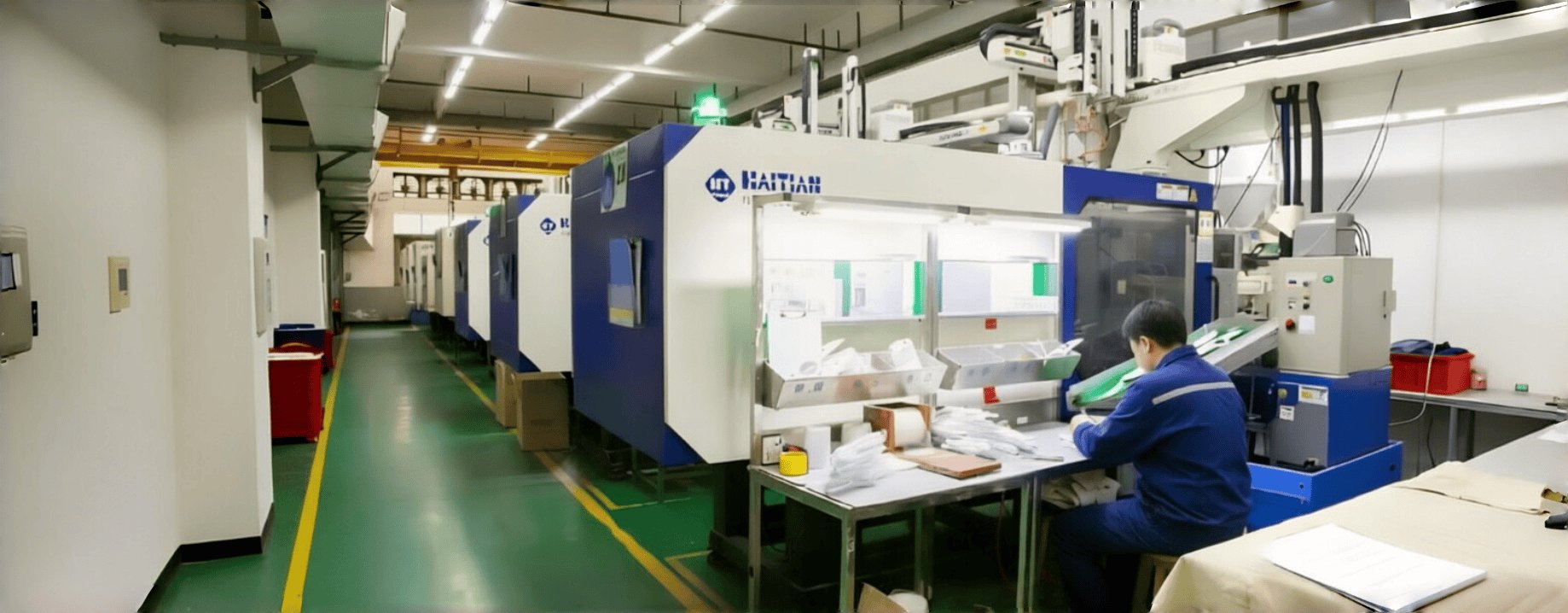
Precision injection molding produces the outer protective cage and inner support core. The mold uses a balanced runner system to ensure uniform filling and minimal warpage. Process parameters (melt temperature, injection pressure, cooling time) are strictly controlled to achieve dimensional accuracy and structural integrity. The cage ribs and slots are molded to precise tolerances to ensure proper media support and fluid flow.
3. End Cap Molding
The top and bottom end caps are injection molded with integrated sealing features (O-ring grooves, threaded connections, or bayonet fittings). End caps are designed to screw into the filter housing and provide a leak-proof seal with the housing.
4. Seal & Gasket Installation
O-rings, gaskets, or integrated over-molded seals are installed at all critical connection points (end caps, threaded ports) to ensure a leak-proof assembly. Seal materials are selected for compatibility with the intended fluid and operating temperature.
5. Final Assembly
Assemble the complete PP filter cartridge by inserting the media-core assembly into the outer cage, securing the end caps, and tightening all connections. Each unit is checked for proper fit, alignment, and dimensional accuracy.
6. Quality Control & Testing
Every batch undergoes rigorous quality inspection, including:
- Dimensional verification (outer diameter, length, port size)
- Pressure testing (leak-proof performance at rated pressure)
- Filtration accuracy testing (micron rating verification)
- Bonding strength testing (end cap to media)
- Visual inspection for defects (flash, warpage, discoloration)
Manufacturing Challenges & Countermeasures for PP Filter Cartridges
1. Cage Deformation & Warpage
| Item | Description |
|---|---|
| Challenge | The outer cage and inner core (thin ribs and slots) tend to warp or deform during cooling, affecting dimensional accuracy and fit with end caps. |
| Root Cause | Uneven wall thickness between ribs and rings; inconsistent cooling rates; insufficient packing pressure; high injection speed causing turbulent flow. |
| Countermeasure | Optimize mold design with balanced cooling channels; use CAE simulation to predict and correct shrinkage; increase packing pressure and time; adjust gate location to ensure uniform flow; use gradual cooling profile. |
2. End Cap Bonding Failure
| Item | Description |
|---|---|
| Challenge | The end caps may detach from the filter media, causing bypass leakage and filtration failure. |
| Root Cause | Contaminated media surface; insufficient melt temperature; low bonding pressure; incompatible materials; smooth media edge with no mechanical anchoring. |
| Countermeasure | Pre-clean media with ultrasonic or plasma treatment; increase melt temperature and bonding pressure; design mechanical anchors (grooves, ribs, or perforations); use compatible materials for end caps and media. |
3. Internal Stress & Cracking
| Item | Description |
|---|---|
| Challenge | Molded parts (cage, core, end caps) may develop internal stress, leading to cracks or premature failure under pressure. |
| Root Cause | Rapid cooling; excessive packing pressure; sharp corners or abrupt wall thickness transitions; insufficient material drying. |
| Countermeasure | Optimize cooling profile (gradual cooling); reduce packing pressure; design generous fillets and smooth transitions; pre-dry material thoroughly; post-mold annealing to relieve stress. |
4. Seal Installation & Leakage
| Item | Description |
|---|---|
| Challenge | Improper seal installation or damaged O-rings can cause leakage at end caps or threaded connections. |
| Root Cause | Dimensional deviation of mating parts; damaged O-rings; insufficient torque during assembly; incompatible seal material. |
| Countermeasure | Maintain tight dimensional tolerances; inspect O-rings before installation; use torque-controlled assembly tools; select seal material compatible with the fluid and temperature. |
Our Workflow
A transparent, step-by-step process from design to delivery — tailored for PP filter cartridges.
Stage 1: R&D Support
We support customer R&D for PP filter cartridge applications. Create the files or improve the design if needed (UG, SolidWorks, ProE, AutoCAD, etc.). We help optimize cage geometry, core structure, end cap design, port size, thread type, and sealing design for your specific fluid filtration requirements.
Stage 2: Mold Process
Mold design (DFM report) → check/approve → approved → make mold → produce sample → sample confirmed → check final mold quality ready to export.
Includes outer cage mold, inner core mold, end cap mold, thread inserts design.
Stage 3: Sample Modification
If the first sample does not meet the customer's requirements (e.g., pressure rating, thread fit, sealing performance, filtration accuracy, or pleat integrity), we can modify the mold to meet them.
Stage 4: Sample Delivery
Produce the customer's requested quantity of PP filter cartridge samples, with free shipping.
Stage 5: Final Delivery
Deliver goods by sea or air; we can accommodate special requirements based on customer demands.
Packaging options are available to protect cartridges from damage, deformation, and contamination during transport.
Why Choose Yixing Technology?
Partner with a trusted leader in precision PP filter cartridge manufacturing.
20+ Years Experience
We have successfully produced more than 1500 new injection molds and parts since 2006.
Extensive experience in molding outer cages, inner cores, end caps, threaded connections, and assembling PP melt-blown, pleated, and mesh filter cartridges.
ISO9001 Certificated
Strict quality control system, providing ROHS/CE certification for your peace of mind.
We inspect each PP filter cartridge batch for dimensional accuracy, thread quality, pressure resistance, sealing performance, bonding strength, and filtration efficiency.
One Stop Service
We provide more value-added operations to simplify your supply chain from design to delivery.
From cage and core injection molding and media die-cutting to pleating, end cap bonding, assembly, pressure testing, and global shipping — all under one roof.
Start Your Quote Here
CATEGORIES
LATEST NEWS
CONTACT US
- Mobile: +8615000908770
- Tel: +86-21-51662821
- WhatsApp: 8615000908770
- Email: contact@yxplasticmolding.com
- Address: Room 323, Building B, Hongchun Business Park, No. 980 Qinghewan Road, Qingpu District, Shanghai