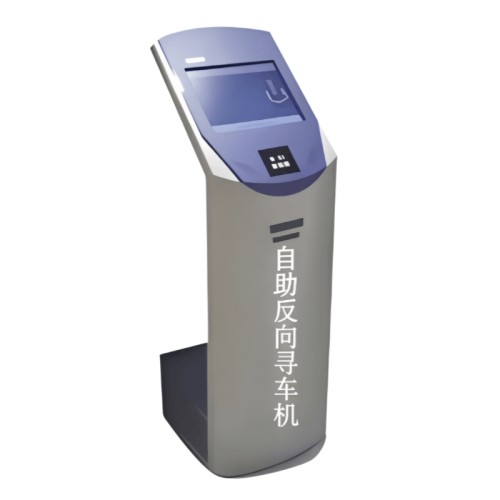
Kiosk Stand — Manufacturing, Welding & Assembly
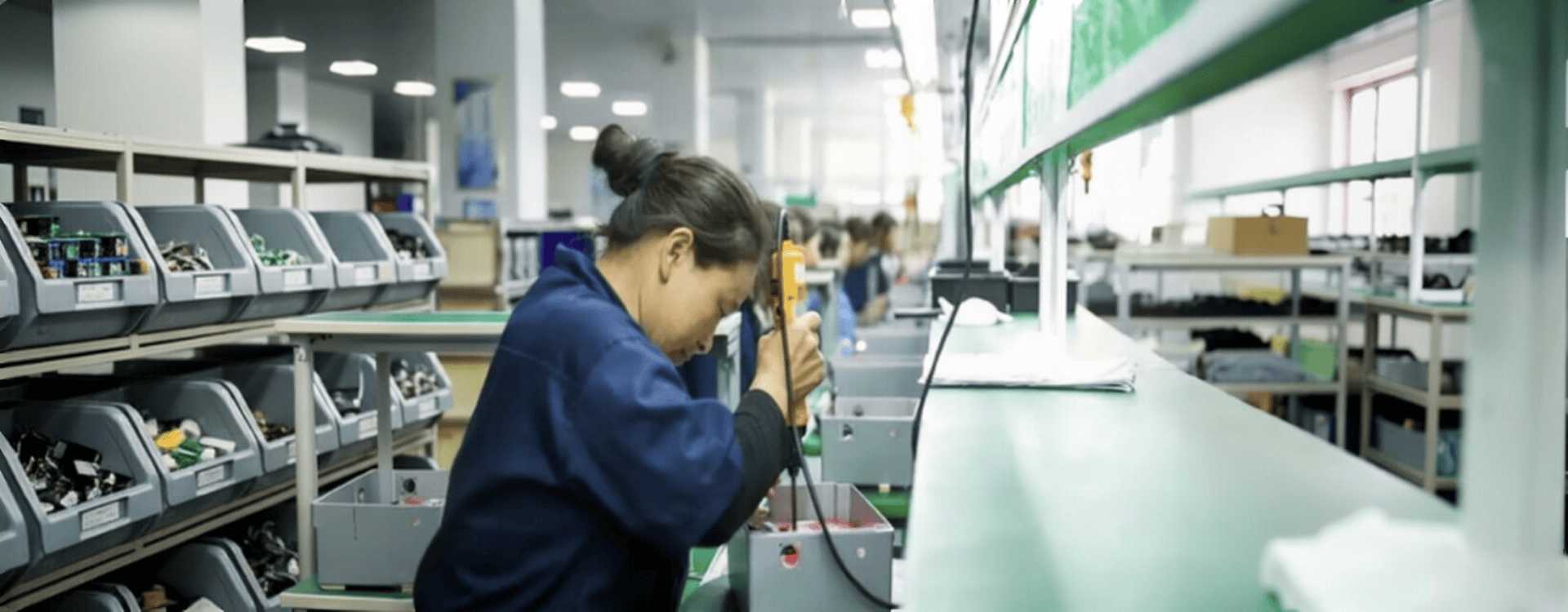
Here is how we ensure top-grade quality from sheet metal to final packing:
Product Specification
Manufacturing, Welding & Assembly Process
1 Metal Parts Fabrication
CHALLENGES
- Assembly Gaps: If the front panel, back cover, side brackets, and base are not cut and bent to tight tolerances, gaps will appear during welding, compromising the enclosure's structural integrity and appearance.
- Bend Angle Deviation: Inaccurate bending of the main stand and side panels causes misalignment during welding, making assembly difficult and the finish uneven.
- Burrs & Sharp Edges: Laser-cut edges can have burrs that prevent tight fit-up and pose a safety risk during handling.
- Large Panel Warping: The tall main stand panel is prone to warping during laser cutting or handling if not properly supported.
OUR METHOD
- Sheet Metal Fabrication: We use cold-rolled steel and laser-cut the front panel, back cover, side brackets, base, and other components according to the drawings.
- Tight Tolerance: To reduce assembly gaps, all parts are produced with a tight tolerance of ±0.1 mm.
- Precise Bending: We use a bending machine to form the side panels and main stand, which ensures perfect accuracy on bend angles and radii.
- Deburring: All laser-cut edges are deburred before bending to ensure safe handling and tight fit-up.
- Warp Prevention: Large panels are supported during cutting and bending to prevent warping.
2 Kitting
CHALLENGES
- Part Mix-Ups: Left and right side brackets look similar, and different screw lengths or weld stud types are easy to confuse.
- Missing Components: A single missing screw, weld stud, or screen bezel can halt the entire assembly line.
OUR METHOD
- All components, including sheet metal parts, screws, weld studs, and the screen bezel, are kitted according to the Bill of Materials (BOM).
- Every part is labeled to ensure no components are missing or mismatched before assembly begins.
- We use color-coded labels and one bin per complete kit, so the operator grabs the bin and moves on — no picking parts one by one.
3 Incoming Quality Control (IQC)
CHALLENGES
- Inconsistent Bent Angles: If the bend angle is off, the enclosure won't square up during welding, causing gaps and misalignment.
- Surface Defects: Scratches, rust, or dents on sheet metal parts will show through the powder coating and cause customer returns.
- Non-Compliant Materials: Using the wrong steel grade or uncertified fasteners can compromise structural integrity and weather resistance.
- Weld Stud Quality: Poorly manufactured weld studs or rivet nuts can fail during welding or assembly, leading to loose connections.
OUR METHOD
- Before assembly, all components are inspected based on ISO 9001 standards — dimensions (especially bent angles and location), surface quality, material certifications, and the quality & quantity of weld studs, rivets, and fasteners.
- Any parts that fail inspection are quarantined and returned to the supplier with an NCR (Non-Conformance Report).
4 Welding & Assembly
CHALLENGES
- Weld Distortion: The tall, thin main stand and base are prone to heat distortion during welding, causing the kiosk to lean or the screen bezel to misalign.
- Weld Quality: The kiosk must withstand public use and potential impact. Welds with porosity, undercut, or lack of fusion can easily fracture.
- Loose Connections: If rivets or weld studs are not set properly, the panel, cover, and brackets won't connect tightly, leading to rattling and structural failure.
- Screen Bezel Misalignment: The bezel must align perfectly with the front panel opening, or the display will look unprofessional and may not fit.
- Base Flatness: The base must sit perfectly flat on the floor, or the kiosk will wobble — a safety hazard.
OUR METHOD
5 Powder Coating
CHALLENGES
- Poor Coverage in Blind Spots: Electrostatic powder struggles to reach inside corners, the backside of the bezel, and around weld seams, leading to bare spots and corrosion.
- Coating Adhesion: Inadequate pre-treatment (shot blasting) can cause the coating to peel, especially in high-traffic public areas.
- Color Consistency: The two-tone silver/blue color must be uniform across the entire enclosure, including hard-to-reach areas.
- Weld Seam Finish: Weld seams must be ground smooth before coating, or they show through as bumps or shadows.
OUR METHOD
- Seam Grinding: Once assembly and welding are complete, we grind all visible weld seams smooth, then shot blast and powder coat.
- Two-Tone Coat: The silver/blue powder coat makes the kiosk highly visible and helps it resist scratches and weather.
- Blind-Spot Coverage: We optimize hanger design for proper grounding and adjust spray gun angles to reach blind spots.
- Adhesion Control: We control shot blasting roughness (Sa 2.5 grade) and apply a phosphate pre-treatment before coating to enhance adhesion.
- Curing: High-temperature curing ensures coating hardness meets stone-chip and weather-resistance standards.
6 Quality Control
CHALLENGES
- Hidden Defects: Internal weld quality, rivet tightness, and coating adhesion cannot be detected by visual inspection alone.
- Dimensional Deviation: If the enclosure is not square, it won't mount properly on the floor or wall, causing installation problems.
- Weld Failure: A unit that passes visual inspection may still have weak welds that fail under load or impact.
- Weather Resistance Failure: A unit that passes visual inspection may still rust after prolonged exposure to humidity or cleaning chemicals.
OUR METHOD
- FAI: Full dimensional and functional report on the first production batch.
- In-Process Checks: Weld visual, rivet tightness, screen bezel alignment, and base flatness checked every 10–20 pieces.
- 100% Visual Inspection: Coating uniformity, color match, and cosmetic appearance checked on every unit.
- Salt Spray Testing: Samples from each batch are tested to verify corrosion resistance.
- Weld Testing: Penetrant testing (PT) or destructive testing on samples to verify weld integrity.
7 Packaging
CHALLENGES
- Transport Damage: Kiosk stands are large, heavy, and have a painted finish that is easily scratched or chipped in global shipping.
- Lost Hardware: Screws, rivets, and mounting brackets can easily go missing in transit.
- Screen Bezel Damage: The screen bezel and display area are vulnerable to impact during shipping.
OUR METHOD
- Each kiosk stand is protected using custom-molded foam inserts to prevent damage during shipping.
- The screen bezel and display area are covered with a protective film or foam pad.
- Small hardware is placed in individually sealed PE bags, secured to a fixed position inside the box to prevent shifting.
- We use 5-layer corrugated boxes with added corner protectors to ensure stacking strength.
Quality Control Specifications
1 Incoming Quality Control (IQC)
- Dimension Inspection: We measure the sheet metal parts with a calibrated vernier, protractor, and height gauge — bent angles and hole locations get a close look. Hold it to ±0.1 mm.
- Surface Quality Check: Look it over and run a hand across it — sharp edges, burrs, rust, scratches, dents. If your finger catches on anything, it's not passing.
- Material Certification Review: Before we accept a batch, we pull the Mill Test Certificate and check it against the spec — chemical composition and mechanical properties have to match. No MTC, no intake.
- Hardware Inspection: We check that the threads are clean, plating intact, and grade marking legible. If the count is short or the grade is wrong, we return the lot.
2 In-Process Checks
- Weld Visual Inspection: Check for weld bead uniformity, leg length, undercut, porosity, spatter, and crater cracks. Use weld gauges where applicable.
- Rivet Tightness Check: Verify rivets are fully set and the panel, cover, and brackets are tightly connected. No movement or rattling allowed.
- Screen Bezel Alignment: Confirm the bezel is correctly aligned with the front panel opening and securely fastened.
- Base Flatness Check: Verify the base sits flat on a surface plate or master jig. No wobble allowed.
- Bend Angle Verification: Check the angle and radius against the drawing. Keep it within ±1°, or it goes back for rework.
3 First Article Inspection (FAI)
- Full Dimensional Report: We measure every critical dimension on the CMM or with calibrated hand tools: overall length, width, height, bend angles, mounting hole positions, bracket locations, and base flatness.
- Assembly Report: We write down four things — are the welds strong and clean, are the rivets pulled tight, is the screen bezel sitting straight, and does the base sit flat? No blanks, every line gets a result.
- Material Verification: We pull the MTC and match the grade to what's on the certificate. If the grade doesn't read right, the batch doesn't come in.
- Surface Finish Check: Gauge the coating thickness and hold the part up against the color standard. If the coat is too thin or off-color, it doesn't pass.
- Fitment Trial: Mount the kiosk onto a master jig or actual floor/wall frame to confirm fitment.
4 Random Sampling (AQL-Based)
- AQL Standard: Use ISO 2859-1 / GB/T 2828.1 (or equivalent) with AQL levels 1.0 – 2.5 depending on criticality.
- Sampling Plan: Determine sample size (AQL 1.5), for example: Lot 500 pcs → Sample 50.
- Inspection Items: Dimensional check, weld visual, rivet tightness, coating thickness, color match, mounting hole position, base flatness.
- Recording: Log results in the QC sampling record sheet.
5 100% Inspection
- Coating Uniformity: Every part gets a visual check for bare spots, orange peel, runs, sags, or color mismatch.
- Coating Thickness: Verify film thickness is within 60–120 μm using a magnetic or eddy current gauge.
- Weld & Assembly Check: 100% visual check for weld defects, loose rivets, misaligned bezel, or base wobble.
- Mounting Hole Fitment: Insert Go/No-Go gauge pins into all mounting holes to verify diameter and position.
6 Functional & Environmental Testing
- Weld Testing: Penetrant testing (PT) or destructive testing on samples to verify weld integrity.
- Salt Spray Test: Samples from each batch are tested to verify corrosion resistance (≥ 48 – 96 hours).
Summary Table — Quality Control
| QC Stage | Inspection Item | Method | Frequency | Acceptance Criteria |
|---|---|---|---|---|
| IQC | Dimension, bend angle, surface, material cert | Calipers, protractors, MTC review | 100% of lots | Within ±0.1 mm, no burrs, cert matches |
| In-Process | Weld visual, rivet tightness, bezel alignment, base flatness | Visual, function test | Every 10–20 pcs | No weld defects, no loose rivets, bezel aligned, base flat |
| FAI | Full dimensional & assembly report | CMM, fitment jig | Once per NPI | All dims within tolerance, fitment OK |
| Random Sampling | Dimensional, weld, rivet, coating, color | AQL 1.0–2.5 | Per lot | Defects ≤ Ac |
| 100% Inspection | Coating, weld, rivet, hole fitment | Visual, Go/No-Go | 100% | Zero critical defects |
| Functional Testing | Weld test, salt spray | PT, salt spray | 1–2 per batch / 5–10% | No weld failure, no rust |
Why Choose Us?
ISO 9001 Certified
Every step — from the moment raw materials arrive at our dock to the final carton leaving our warehouse — follows ISO 9001 procedures. We also provide material certifications (MTC), salt spray test reports, and compliance documents to meet your market requirements.
High Precision Sheet Metal Fabrication & Welding
We hold all sheet metal parts to ±0.1 mm and bend end parts on CNC machines to ±1°, and we use welding fixtures to keep the enclosure square during welding.
Rust-Resistant Powder Coating
We use shot blasting + phosphating pre-treatment to ensure maximum coating adhesion. The two-tone silver/blue powder coat is highly visible and tested to 48–96 hours of salt spray for outdoor weather resistance. We grind weld seams smooth before coating for a flawless finish.
Good Packaging for Global Shipping
We protect products with custom-molded foam inserts and a 5-layer corrugated carton — designed to survive international transit and protect the painted finish, screen bezel, and base. We individually bag small hardware and secure it to prevent loss.
Low MOQ & Fast Lead Time
From prototype to mass production, we support low MOQs for new products and also high-volume production when needed. Our in-house tooling and fixture capability means faster lead times and better cost control.

Start Your Quote Here
CATEGORIES
LATEST NEWS
CONTACT US
- Mobile: +8615000908770
- Tel: +86-21-51662821
- WhatsApp: 8615000908770
- Email: contact@yx-molding.com
- Address: Room 323, Building B, Hongchun Business Park, No. 980 Qinghewan Road, Qingpu District, Shanghai