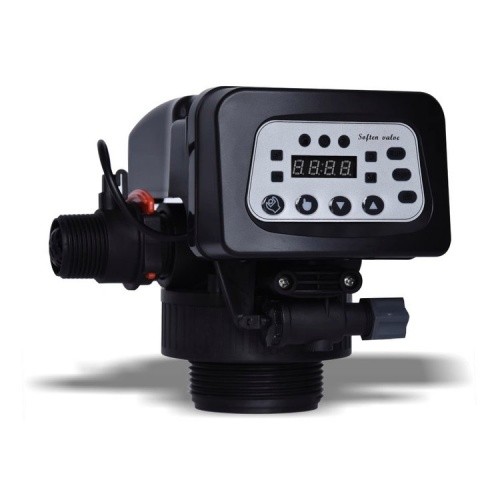
This plastic control valve sub-assembly is an automatic softening / filter control valve built on a PA6 + 30% GF (glass-fiber reinforced polyamide) housing with POM, NBR, silicon and stainless-steel internals — engineered for water softening, filtration and industrial water-treatment duty.
It is IP X7 waterproof and rated to a 10-bar maximum working pressure. Every unit is 100% pressure tested at 10 bar, and the housing is joined by automated hot melt welding — chosen over ultrasonic welding for the structural strength the 10-bar requirement demands — so all parts are reliably welded and leak-free.
Product Specification – Plastic Control Valve
Our Process
1. Component Kitting & Incoming Inspection
The process begins with the kitting of all components, including the main valve body, solenoid assembly, actuator housing, sealing gaskets and screws. We carry out incoming inspection in accordance with ISO 9001 standards, focusing on material specifications — color consistency, food-grade compliance and UL ratings.
2. Housing & Electronics Sub-Assembly
The electronic control module, including the LCD screen and keypad, is mounted in the actuator housing, then taped to the main valve body as a sub-assembly.
3. Automated Hot Melt Welding
To meet the 10-bar pressure test requirement, we use hot melt welding to ensure structural integrity. While ultrasonic welding offers a cleaner look, it often lacks the strength this application needs. An automatic welding machine reliably welds all parts and reduces manual-welding errors. We then inspect the sealing surfaces and correctly seat all O-rings and gaskets to prevent leaks.
4. Pressure Testing (10-Bar)
After assembly, we test every control valve at 10 bar. Each valve is sealed at both ends with dedicated test plugs, pressurized to 10 bar with compressed air, then fully submerged in a water tank for at least 1 minute while every joint, seam and weld line is inspected for air bubbles. Even a single bubble means the unit is rejected and reworked — this 100% water-immersion air-leak test guarantees a leak-proof seal on every part we ship.
5. Final Assembly
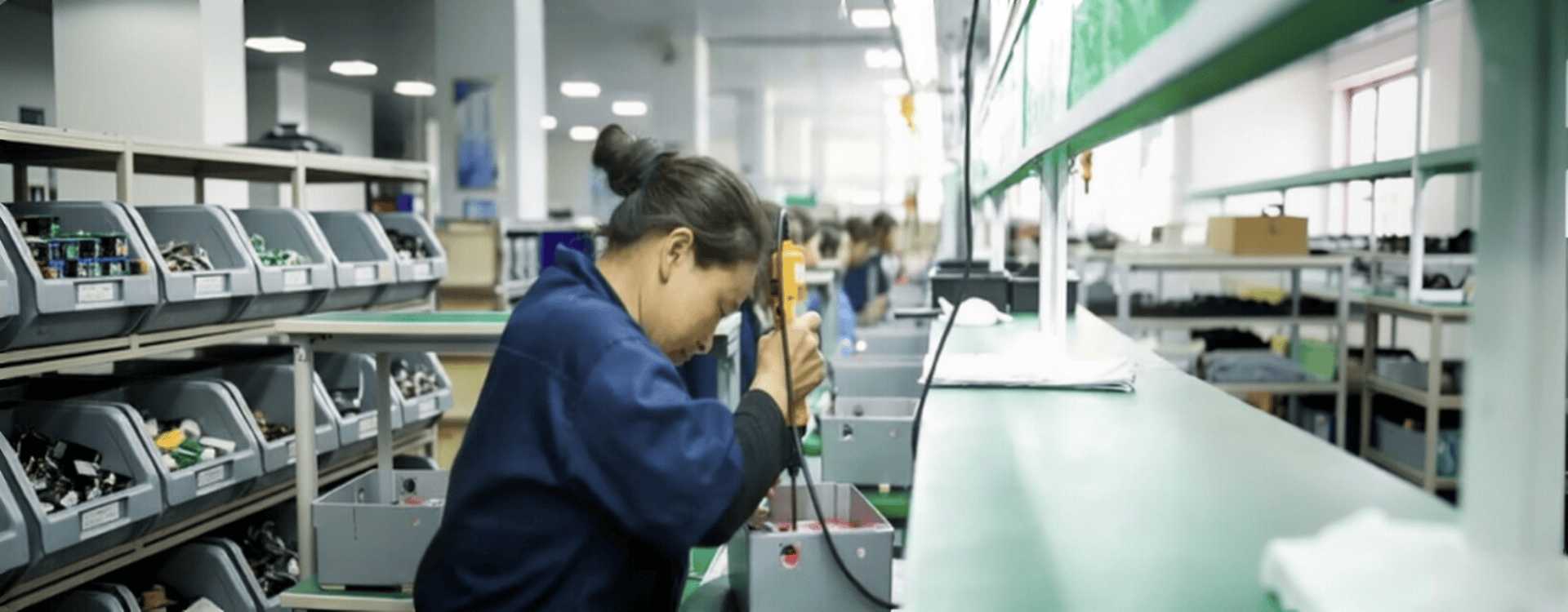
We install the PCB, solenoid, piston and spring into the valve body by hand, using calibrated torque drivers — not by feel — to avoid loose or over-torqued connections.
6. IPX7 Immersion Test
Each assembled valve is placed in an immersion tank and fully submerged. The water level is set so the top of the enclosure is at least 150 mm below the surface, with the lowest point of the unit at approximately 1 m depth, and the sample is kept immersed for 30 minutes.
7. Functional & Electrical Testing
Insulation, dielectric-withstand, leakage-current and power-on functional tests verify the unit is electrically safe and operates correctly after power-on (detailed in the section below).
8. Packaging
Finally, we package the product with foam inserts, a color box and an outer five-layer corrugated cardboard carton to prevent damage during transportation.
Functional & Electrical Testing
Insulation Resistance Test
Check whether insulation resistance is high enough.
Dielectric Withstand / Hipot Test
Check whether insulation can withstand high voltage without breakdown.
Leakage Current Test
Check whether unintended current is within safe limits.
Power-On Functional Test
Check whether the product operates correctly after power-on.
Key Challenges & Solutions Summary
1. Plastic Housing Loose or Cracking
ChallengeThe plastic housing can become loose or crack during assembly.
SolutionUse calibrated torque drivers with preset limits.
2. Leaks at Welded Joints or O-rings
ChallengeLeaks can occur at welded joints or O-rings under pressure.
SolutionAutomated hot melt welding + 100% pressure testing at 10 bar.
3. Electronic Module Damage (ESD / Moisture)
ChallengeThe electronic module can be damaged by electrostatic discharge or moisture.
SolutionAnti-static wrist straps and a humidity-controlled testing area.
4. Solenoid Misalignment or Failure
ChallengeThe solenoid can misalign or fail to operate correctly.
SolutionPrecision fixtures during assembly + 100% functional testing.
5. Display Damage During Shipping
ChallengeThe LCD display can be damaged during transportation.
SolutionCustom foam inserts for secure packaging.
The Industry We Serve
Our plastic control valves are widely used in various water treatment and fluid control systems, including:
Why Choose Us?
Partner with a trusted manufacturer of precision plastic control valves.
1. ISO 9001 Certified
From incoming material inspection to final packaging, we control every process according to ISO 9001. We also provide CE, ROHS and UL certifications to meet your market requirements.
2. Advanced Hot Melt Welding
We choose hot melt welding over ultrasonic for structural strength: ultrasonic welding often cannot withstand the 10-bar requirement, while our automated hot melt machines deliver consistent, reliable, leak-free joints.
3. 100% 10-Bar Pressure Testing
Every single valve undergoes a full 10-bar pressure test before leaving the factory, eliminating leak risk and verifying both the valve body and the seals — no batch sampling, each unit is verified.
4. Good Packaging for Global Shipping
We protect products with foam inserts + color box + 5-layer corrugated carton — a three-layer system designed to survive international transit and protect the LCD, solenoid and valve body.
5. Dual Mold Capability: Plastic + Metal
We manufacture both plastic injection molds and metal stamping dies in-house: plastic molds for valve bodies and housings (PA6+30GF, PP, ABS), metal dies for progressive stamping and deep drawing — one-stop sourcing that saves time and cost.
6. Customization Available
We support customized specifications for both plastic and metal parts, including material selection, color, voltage, connection type and communication options.