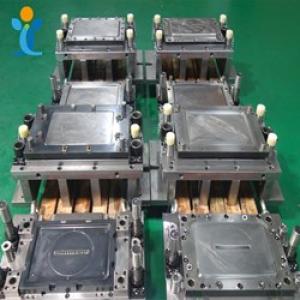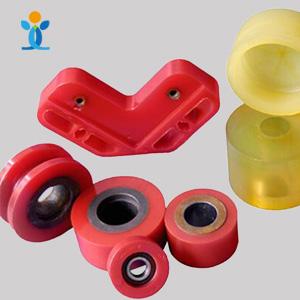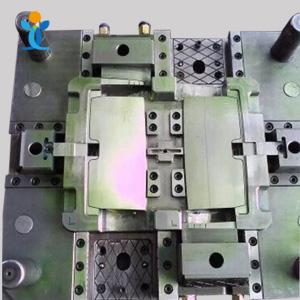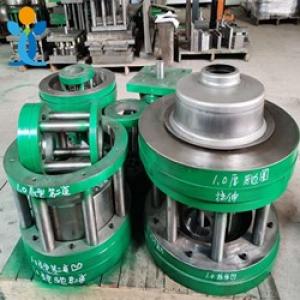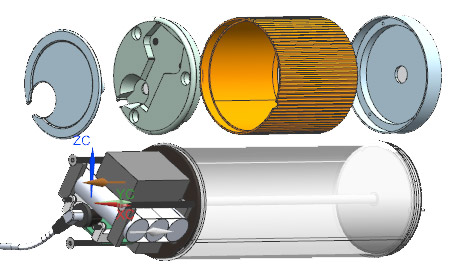
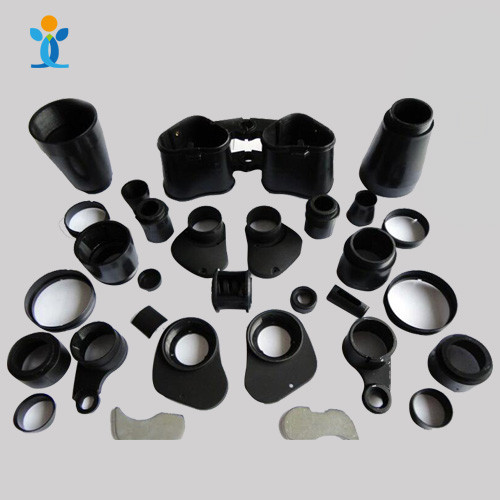
A series of custom injection molds designed to produce a wide range of precision plastic components — from simple cylindrical caps and tubes to complex optical housings, threaded connectors and structural brackets. These molds are typically used for OEM / ODM manufacturing, where each part requires a unique mold design.
Built on an LKM (Standard) or Custom mold base with 718H, S136, NAK80 or H13 tool steel (selected by part complexity), they handle engineering plastics (ABS, PC, PA, POM, PMMA, PP, PE) and are rated for 500,000+ shots across mold weights from 150 to 5,000 kg.
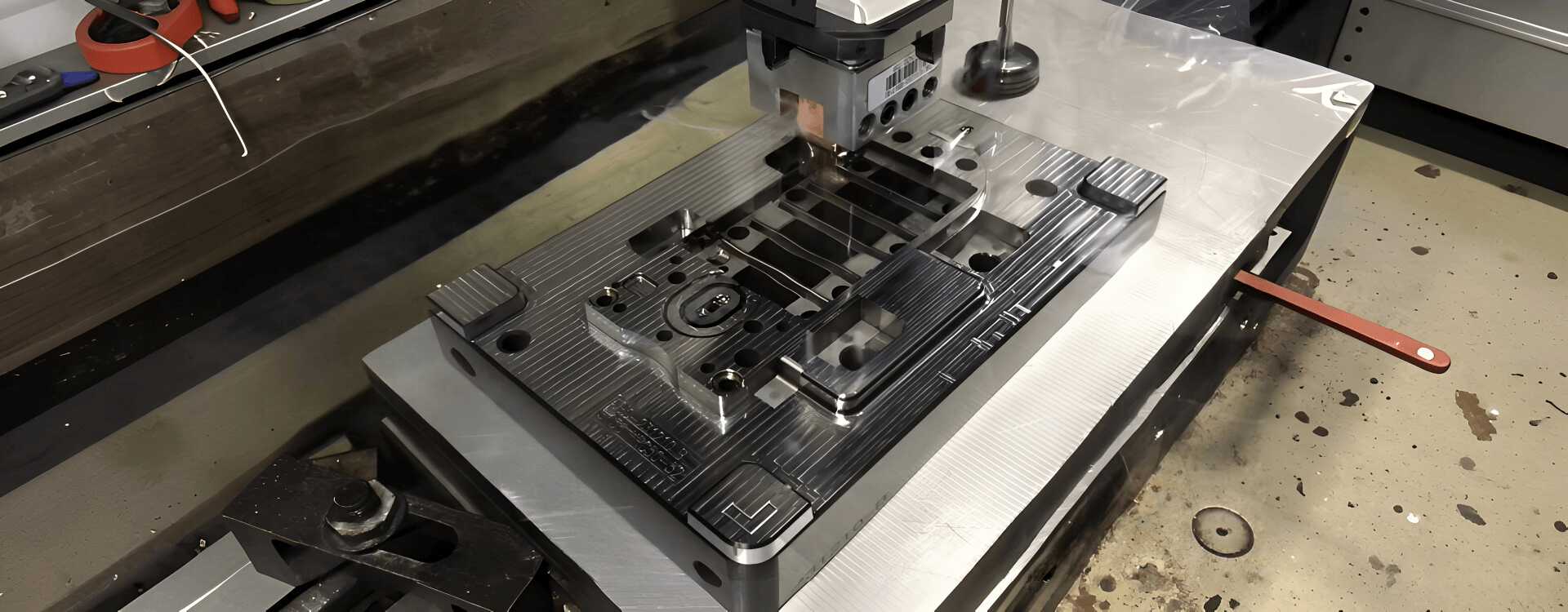
Whether it is a single-cavity precision part or a family mold producing several different parts in one cycle, the design is driven by Mold Flow Analysis (MFA), high-precision CNC and EDM, and tight tolerance control — so every component fits, functions and finishes to spec.
Technical Specifications
Core Characteristics
Versatile Design Capability
We handle everything from simple cylindrical parts to complex geometries with undercuts, threads, and optical surfaces.
High-Precision Tolerances
Whether it’s a tight-threaded cap or an optical housing, these molds are machined to exact specifications.
Family Mold Efficiency
Many of these parts can be combined into a Family Mold (producing multiple different parts in one cycle) to reduce tooling costs and increase production efficiency.
Material Expertise
We work with a wide range of engineering plastics (ABS, PC, PA, POM, PMMA) to meet specific mechanical and thermal requirements.
Processing Difficulties & Countermeasures
1. Complex Geometry & Undercuts
DifficultyParts like the optical housings and brackets often have complex shapes, undercuts, or internal threads. These features cannot be formed by a simple straight-pull mold and require side actions, sliders, or unscrewing mechanisms.
CountermeasureWe design custom sliders, lifters, or unscrewing cores to form these features. We use Mold Flow Analysis (MFA) to ensure the plastic fills evenly around these complex structures, and high-precision CNC and EDM to machine the intricate details.
2. Tight Dimensional Tolerances
DifficultyMany of these parts (like threaded caps or optical housings) require very tight tolerances (often within ±0.02mm). Any deviation in mold machining or shrinkage compensation results in a part that doesn’t fit or function properly.
CountermeasureWe use high-speed CNC machining and precision EDM to achieve tight tolerances. We use Mold Flow Analysis to accurately predict shrinkage and compensate for it in the mold design, and conduct CMM inspection on first samples to verify dimensions.
3. Surface Finish & Aesthetics
DifficultyThe parts require a uniform, high-quality surface finish (often matte or textured). Any flow marks, weld lines, or polishing defects will be visible and may be rejected by the customer.
CountermeasureWe optimize the gate location and injection speed to eliminate flow marks, use high-quality polishing and texture etching (MT/YS) to achieve the desired finish, and use hot runner systems to maintain consistent melt temperature and reduce weld lines.
4. Warpage & Shrinkage Control
DifficultyDifferent plastic materials (ABS, PC, PA) have different shrinkage rates. Parts with varying wall thicknesses (like brackets or housings) are prone to warping, which can affect assembly and function.
CountermeasureWe design uniform cooling channels to ensure even temperature distribution, use Mold Flow Analysis to simulate the cooling process and optimize cooling time, and use adjustable cooling zones to fine-tune the temperature and minimize warpage.
5. Ejection of Fragile or Complex Parts
DifficultySmall, thin-walled, or complex parts can be easily damaged during ejection. Standard ejector pins can leave marks or crack the part.
CountermeasureWe use sleeve ejectors, stripper plates, or air-assisted ejection to distribute the force evenly, position the ejector pins on non-critical surfaces, and carefully calibrate the ejection stroke to prevent deformation.
6. Material Selection & Processing
DifficultyDifferent materials require different processing parameters (temperature, pressure, cooling time). Using the wrong parameters can cause defects like short shots, burns, or brittle parts.
CountermeasureWe work closely with the customer to select the optimal material, provide detailed processing guidelines and conduct sampling trials to optimize injection parameters, and use Mold Flow Analysis to predict material behavior and adjust the mold design accordingly.
How to Select the Material You Need?
| Material | Key Properties | Typical Applications |
|---|---|---|
| ABS | Excellent impact strength, good dimensional stability, easy to machine, good surface finish. | Housings, brackets, caps, structural components. |
| PC | Very high impact resistance, transparent, excellent dimensional stability, high heat resistance. | Optical housings, lenses, safety covers, structural parts. |
| PA (Nylon) | High strength, toughness, excellent wear resistance, good chemical resistance. | Gears, bearings, connectors, functional mechanical parts. |
| POM (Acetal) | High stiffness, low friction, excellent wear resistance, good dimensional stability. | Gears, sliding parts, bearings, precision mechanical components. |
| PMMA (Acrylic) | Outstanding optical clarity (light transmittance >92%), excellent surface finish, good weather resistance. | Lenses, display covers, transparent housings, light pipes. |
| PP | Good chemical resistance, high fatigue resistance, low density, low cost. | Containers, living hinges, caps, household products. |
| PE (HDPE/LDPE) | Excellent chemical resistance, high impact strength, good moisture barrier, low cost. | Bottles, containers, caps, pipes, packaging. |
For optical clarity: Choose PC or PMMA. PC offers superior impact and heat resistance; PMMA offers better surface hardness and optical clarity.
For wear resistance and low friction: Choose POM or PA. POM offers better dimensional stability; PA offers higher strength and toughness.
For general structural parts: ABS is the most balanced choice with excellent overall properties and processing ease.
For chemical resistance and cost-efficiency: PP or PE are ideal for non-structural applications like containers and caps.
Our Workflow
A transparent, step-by-step process from design to delivery.
Stage 1: R&D Support & DFM Analysis
We support customer R&D for custom plastic components. We create or improve 3D files (UG, SolidWorks, ProE, AutoCAD, etc.). Crucially, we provide a Mold Flow Analysis (MFA) report to optimize the filling balance, gate location, and cooling layout for each unique part.
Stage 2: Mold Process & Precision Machining
Mold design (DFM report) → check/approve → approved → make mold → integrate sliders/unscrewing mechanisms → produce sample → sample confirmed → check final mold quality, ready to export.
We specifically validate the dimensional accuracy and surface finish of all cavities during this stage.
Stage 3: Sample Modification & Dimensional Optimization
If the first sample does not meet the customer’s requirements (e.g., warpage, dimensional deviations, or surface defects), we can modify the mold. We fine-tune the gate sizes, cooling circuits, and injection parameters to meet your exact requirements.
Stage 4: Sample Delivery
Produce the customer’s requested quantity (typically 500-1000 shots for validation), with free shipping.
Stage 5: Final Delivery
Deliver goods by sea or air; we can accommodate special requirements (like custom crating or specific packaging) based on customer needs.
Why Choose Us?
Partner with a trusted leader in precision injection molding.
20+ Years of Experience
We have successfully produced more than 1,500 new injection molds and parts since 2006. We have deep expertise in complex precision components for the optical, automotive, medical, and industrial sectors.
ISO9001 Certificated
Strict quality control system, providing ROHS/CE certification for your peace of mind. We ensure every mold base and steel insert meets rigorous dimensional and wear-resistance standards.
One-Stop Service
We provide more value-added operations to simplify your supply chain from design to delivery. From Mold Flow Analysis to custom slider design and precision machining, we handle the technical complexity so you don’t have to.