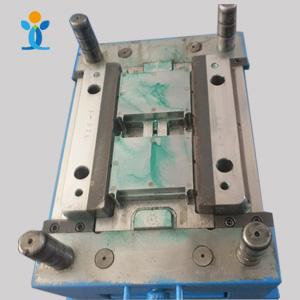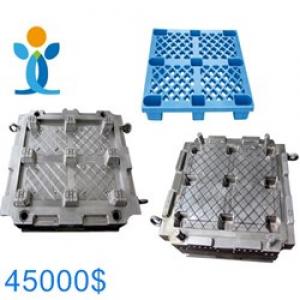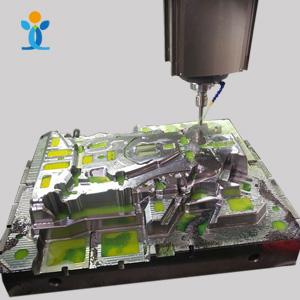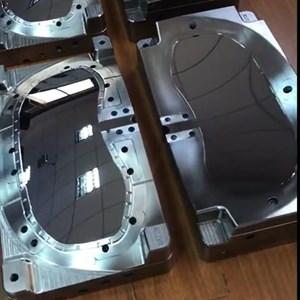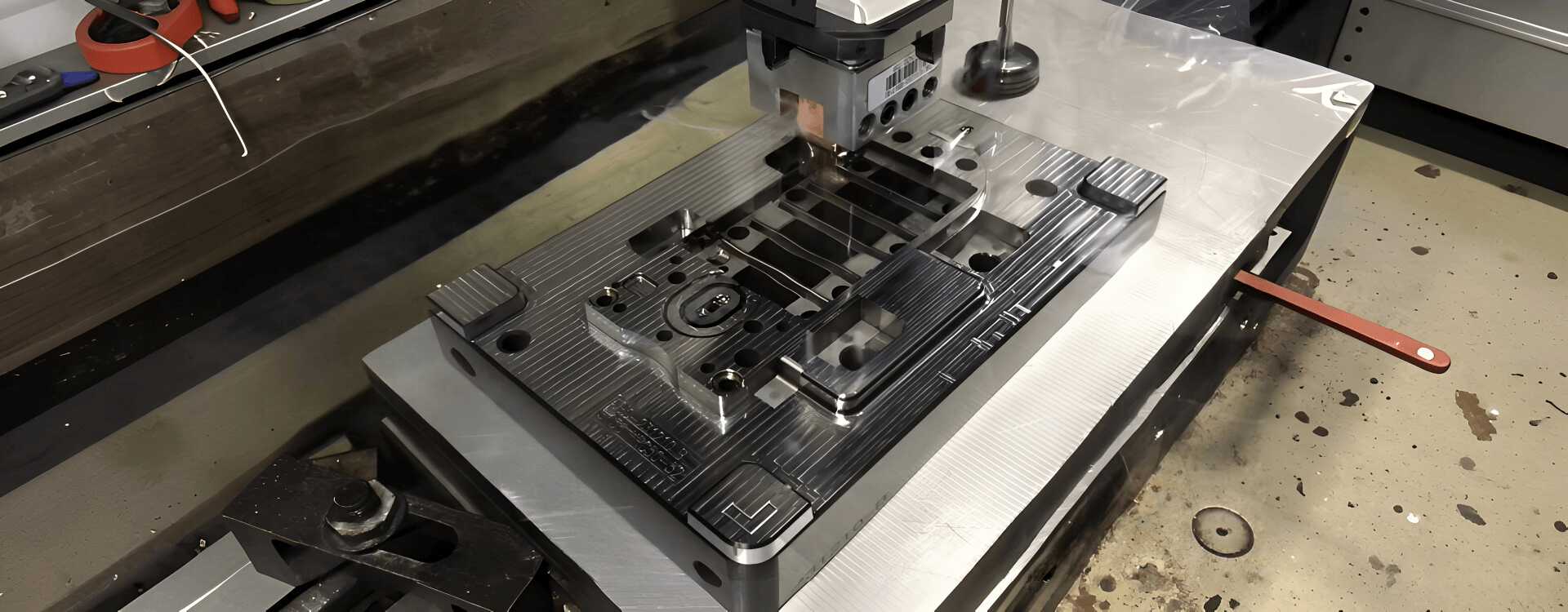
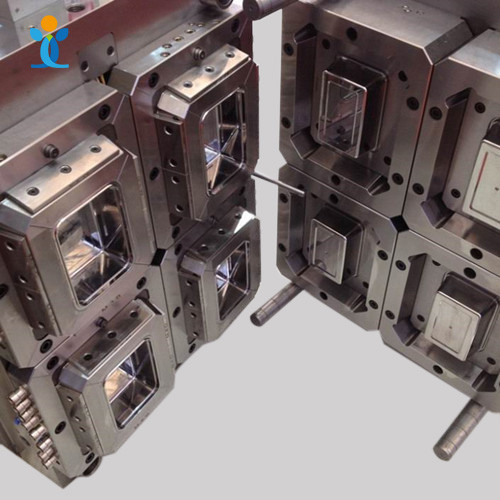
1x4 (Four-Cavity) injection mold designed to produce plastic cases or housings — such as clear packaging boxes, electronic device covers or display cases. The mold features four distinct, deeply contoured, highly polished cores that form the case’s internal cavity, paired with matching cavity blocks.
Built on an LKM (Standard) or Custom Heavy-Duty mold base with S136, NAK80 or 718H corrosion-resistant steel for optical clarity, it is engineered for high-clarity, high-impact grades (ABS, PC, PMMA, PC/ABS, PETG) and rated for 500,000+ shots, delivering long mold life on demanding optical parts.
A hot runner valve-gate system, mirror-polished optical surfaces (SPI A1-A2), a deep-core reinforced base and precision guide pins combine to fill all four cavities evenly, eliminate flow marks and keep uniform wall thickness — ensuring flawless, transparent parts every cycle.
Technical Specifications
Core Characteristics
High-Gloss Optical Finish
The cores and cavities are polished to a mirror-like finish (SPI A1-A2). This is essential for producing transparent or high-gloss cases without surface defects.
Multi-Cavity Efficiency (1x4)
Produces four cases per injection cycle, significantly increasing output and reducing unit cost for high-volume production.
Deep Core & Complex Geometry
The deep, rectangular cores require advanced machining and precise alignment to ensure uniform wall thickness and a perfect fit of the final case.
Robust Construction
The mold base is heavily reinforced with thick plates and sturdy guide pins to withstand the high injection pressures required for deep, thin-walled parts.
Processing Difficulties & Countermeasures
1. Deep Core Filling & Uniform Wall Thickness
DifficultyThe deep, rectangular cores create a long flow path for the plastic. The plastic must fill the entire cavity evenly before it freezes, or short shots and uneven wall thickness will occur. This is especially critical for transparent cases where thickness variations are highly visible.
CountermeasureWe use Mold Flow Analysis (MFA) to simulate the filling process and optimize the gate location and runner diameter. We often recommend a hot runner valve gate system to ensure balanced, rapid filling of all four cavities, and use high-speed injection to fill the thin walls before they freeze.
2. Optical Surface Polishing (No Scratches or Flow Marks)
DifficultyFor transparent or high-gloss cases, any micro-scratch, EDM recast layer, or flow mark on the core or cavity will be visible on the final part. Achieving a flawless SPI A1-A2 finish on deep, complex geometry is extremely challenging.
CountermeasureWe use high-speed CNC machining followed by precision EDM with fine electrode tolerances, hand-polish the final surface with diamond paste and ultrasonic polishing to achieve a mirror finish, and optimize gate location and injection speed to eliminate weld lines and flow marks.
3. Demolding of Deep, Thin-Walled Cases
DifficultyThe deep, thin-walled case can be fragile and easily cracked or deformed during ejection. The deep core also creates a vacuum that resists demolding, making it difficult to release the part without damage.
CountermeasureWe use large-diameter sleeve ejectors or air-assisted ejection to distribute the force evenly, use air poppet valves to break the vacuum between the case and the core for smooth release without deformation, and carefully calibrate the ejection stroke.
4. Core Alignment & Wear
DifficultyThe four deep cores must align perfectly with their corresponding cavities to ensure uniform wall thickness in all four cases. Any misalignment will cause thin spots or flashing, compromising the case’s fit and appearance.
CountermeasureWe use high-strength guide pins and bushings for precise alignment, machine the cores and cavities to tight tolerances using high-speed CNC and EDM, and recommend regular maintenance and alignment checks.
5. Gate Vestige & Cosmetic Defects
DifficultyThe gate location must be carefully chosen to ensure balanced filling and avoid visible flow marks on the transparent case surface.
CountermeasureWe use Mold Flow Analysis to determine the optimal gate location. For high-clarity cases, we often recommend a hot runner valve gate system with a pinpoint gate at the bottom center, optimize gate size to minimize vestige, and polish the bottom surface to match the required finish.
6. Warpage & Dimensional Stability
DifficultyThe large, flat surfaces of the case are prone to warping. This can affect the lid fit and the case’s overall appearance.
CountermeasureWe optimize the holding pressure and cooling time during sampling, design the mold with adjustable cooling zones to fine-tune the temperature distribution and minimize warpage, and use CMM dimensional inspection to ensure the final part meets tight tolerances.
Applicable Industries
Our Workflow
A transparent, step-by-step process from design to delivery.
Stage 1: R&D Support & DFM Analysis
We support customer R&D for plastic cases. We create or improve 3D files (UG, SolidWorks, ProE, AutoCAD, etc.). Crucially, we provide a Mold Flow Analysis (MFA) report to optimize the filling balance, gate location, and cooling layout for all four cavities.
Stage 2: Mold Process & Optical Integration
Mold design (DFM report) → check/approve → approved → make mold → integrate hot runner system → produce sample → sample confirmed → check final mold quality, ready to export.
We specifically validate the optical clarity and surface finish of all four cavities during this stage.
Stage 3: Sample Modification & Optical Optimization
If the first sample doesn’t meet the customer’s requirements (e.g., flow marks, warpage, or uneven wall thickness), we can modify the mold. We fine-tune the gate sizes, cooling circuits, and injection parameters to meet your exact optical requirements.
Stage 4: Sample Delivery
Produce the customer’s requested quantity (typically 500-1000 shots for validation), with free shipping.
Stage 5: Final Delivery
Deliver goods by sea or air; we can accommodate special requirements (like custom heavy-duty crating for the large mold) based on customer needs.
Why Choose Us?
Partner with a trusted leader in precision injection molding.
20+ Years of Experience
We have successfully produced more than 1,500 new injection molds and parts since 2006. We have deep expertise in multi-cavity molds and optical-grade molds for the packaging and consumer electronics industries.
ISO9001 Certificated
Strict quality control system, providing ROHS/CE certification for your peace of mind. We ensure every mold base and steel insert meets rigorous dimensional and optical standards.
One-Stop Service
We provide more value-added operations to simplify your supply chain from design to delivery. From Mold Flow Analysis to optical polishing and texture etching, we handle the technical complexity so you don’t have to.